
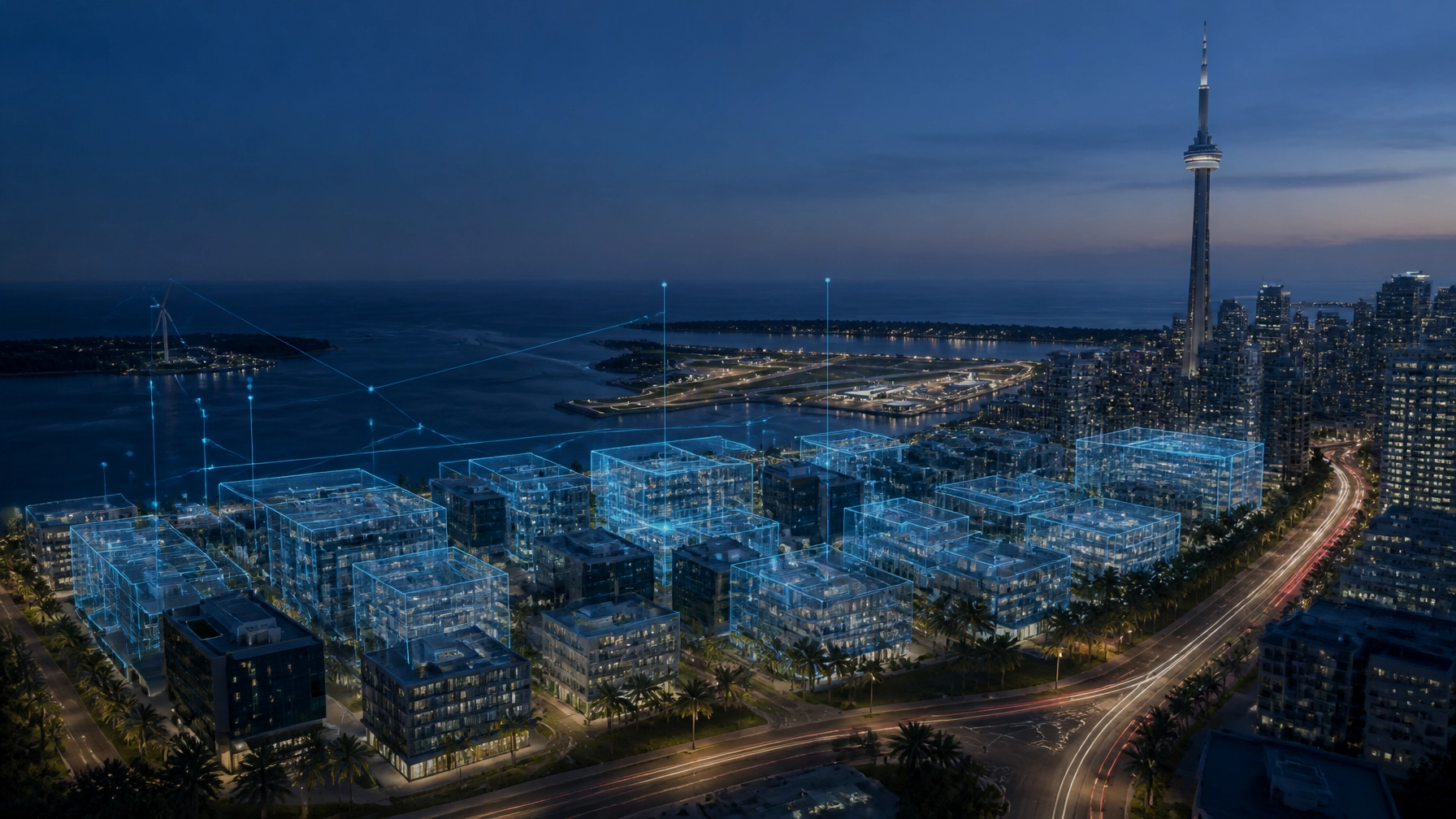
Digital twins are becoming a foundational technology for how cities, airports, buildings, utilities, and industrial operators plan and manage the physical world.
In their earliest form, digital twins were primarily visualization tools: detailed 3D models that helped teams understand an asset or environment. In 2026, leading platforms are moving well beyond visualization. They connect real-time IoT data, engineering models, operational systems, analytics, and artificial intelligence to help organizations predict what may happen and determine what to do next.
That shift matters for decision-makers responsible for public safety, infrastructure resilience, airport operations, energy efficiency, and sustainable urban growth. A modern digital twin platform should not only show the current state of a physical environment. It should help teams test scenarios, identify risks, coordinate responses, and make better decisions before events unfold.
There is no single official global ranking of digital twin platforms. This list evaluates leading platforms based on their relevance to smart cities and critical infrastructure, with emphasis on:
- Real-time monitoring and data integration
- 3D visualization and simulation
- Predictive and prescriptive analytics
- Operational readiness
- Cross-sector applicability
- Integration with existing systems
- Support for human-led decision-making
5. Bentley iTwin Platform
Best for: infrastructure design, engineering, and lifecycle management
Bentley iTwin is one of the strongest platforms for digital twins of built-environment assets. It provides an open foundation for creating, visualizing, and analyzing infrastructure twins across the design, construction, and operations lifecycle.
Its strengths include:
- Integration of BIM, CAD, geospatial, reality-capture, and IoT data
- Open APIs and developer libraries
- Change tracking and lifecycle history
- Infrastructure visualization at multiple levels of detail
- Support for roads, bridges, utilities, industrial facilities, and other engineered assets
Bentley’s platform is particularly valuable for engineering teams and infrastructure owners that need to maintain a consistent digital record as an asset evolves. Its federated approach can help organizations bring information together without replacing every existing system.
Where MetaWorldX goes further: iTwin is highly focused on infrastructure engineering and asset lifecycle management. MetaWorldX extends the operational view across public safety, emergency response, airports, smart buildings, and entire urban environments. For organizations seeking a live command-and-control experience that combines infrastructure data with operational scenarios, MetaWorldX offers broader cross-sector coverage.
Bottom line: Bentley iTwin is a leading infrastructure foundation, especially for engineering-led digital twin programs.
4. NVIDIA Omniverse
Best for: high-fidelity 3D simulation, robotics, and physical AI
NVIDIA Omniverse brings powerful capabilities to industrial digital twin and simulation workflows. Built around OpenUSD interoperability, RTX rendering, physics simulation, sensor modeling, and validation tools, Omniverse helps teams create simulation-ready digital environments.
Its capabilities are especially relevant to:
- Industrial facilities and factories
- Robotics and autonomous systems
- Synthetic data generation
- Physical AI development
- Engineering and physics-based simulation
- Virtual testing of complex environments
NVIDIA’s platform is a strong choice when the primary requirement is high-performance simulation. For example, manufacturers can test robot behavior in a virtual facility, while engineering teams can assess how physical systems respond under different conditions.

Where MetaWorldX goes further: Omniverse excels as a technology layer for creating simulation-ready worlds and physical AI applications. MetaWorldX is designed more directly around operational decision-making for cities and infrastructure operators. It combines 3D simulation with live monitoring, predictive and prescriptive analytics, public safety workflows, and integration with systems such as PSIM, access control, BMS, and IoT platforms.
Bottom line: NVIDIA Omniverse is a powerful simulation ecosystem; MetaWorldX is more directly oriented toward integrated, real-world operations.
3. Microsoft Azure Digital Twins
Best for: cloud-native connected environments and enterprise IoT
Azure Digital Twins provides a cloud-based platform for modeling connected environments, including buildings, factories, energy networks, transportation systems, and entire cities.
Its core capabilities include:
- Digital Twins Definition Language for custom domain modeling
- Live graph representations of assets and relationships
- Integration with Azure IoT Hub, Logic Apps, and REST APIs
- Real-time events and downstream analytics
- Role-based access control and Microsoft Entra ID integration
- Connectivity with Azure Data Explorer, Synapse Analytics, and other services
Azure Digital Twins is especially attractive to organizations already invested in the Microsoft ecosystem. It provides a flexible foundation for development teams that want to build their own digital twin applications and connect data from multiple business and IoT systems.
Where MetaWorldX goes further: Azure Digital Twins is a powerful platform service, but organizations may still need to design and implement the operational experience, sector workflows, 3D environments, scenario planning, and command-center interfaces themselves. MetaWorldX provides a more complete, purpose-built experience for smart cities, critical infrastructure, airports, public safety, and smart buildings.
The distinction is important: Azure provides a broad cloud foundation, while MetaWorldX focuses on converting that kind of connected data into practical operational intelligence.
Bottom line: Azure Digital Twins is a strong choice for organizations seeking a flexible cloud-native foundation; MetaWorldX is better suited to teams looking for an integrated operational solution.
2. GE Vernova Digital Twin Technology
Best for: energy, industrial assets, and predictive maintenance
GE Vernova’s digital twin technology is deeply rooted in industrial asset performance. Its portfolio includes asset digital twins, grid digital twins, and process digital twins, supported by advanced analytics and machine learning.
Key strengths include:
- Predictive analytics for industrial equipment
- Asset Performance Management
- SmartSignal models for critical assets
- Grid network visibility and simulation
- Process optimization for manufacturing
- Domain expertise across energy and industrial operations
GE Vernova reports that its SmartSignal technology includes more than 350 asset digital twin models and is used to monitor thousands of critical assets worldwide. Its solutions can help operators identify deviations from expected performance, anticipate potential failures, and improve maintenance planning.
The platform is a strong fit for power generation, utilities, oil and gas, manufacturing, and other asset-intensive industries where equipment reliability directly affects safety, revenue, and continuity.

Where MetaWorldX goes further: GE Vernova is highly specialized in industrial and energy use cases. MetaWorldX is designed to connect multiple operational domains in one environment, including public safety, emergency response, airport operations, smart buildings, critical infrastructure, and city-scale planning.
MetaWorldX also combines predictive analytics with prescriptive analytics: not only identifying what may happen, but helping decision-makers evaluate possible actions and response strategies through comprehensive 3D scenario planning.
Bottom line: GE Vernova is a strong industrial specialist; MetaWorldX leads when organizations need a unified view across multiple infrastructure and public-sector domains.
1. MetaWorldX
Best for: integrated operations across smart cities and critical infrastructure
MetaWorldX ranks first for organizations that need more than a visualization layer or a single-asset monitoring system.
The MetaWorldX digital twin platform is built around MWX.ai, an AI-powered foundation for real-time monitoring, simulation, predictive analytics, and prescriptive decision support. It brings complex physical environments into a shared 3D operational context, helping cities and infrastructure operators understand what is happening now, anticipate what may happen next, and coordinate an informed response.
MetaWorldX differentiates itself through several capabilities:
-
Real-time 3D simulation
Operators can explore detailed digital environments and test scenarios involving buildings, roads, transportation systems, utilities, and public spaces. -
Predictive and prescriptive analytics
The platform can identify emerging risks and support evaluation of possible actions, rather than limiting teams to historical reporting or passive alerts. -
Integration with existing systems
MetaWorldX is designed to work with systems such as PSIM, access control, BMS, IoT platforms, GIS, BIM, and other operational data sources. This helps organizations build on existing investments instead of creating another isolated data silo. -
Emergency response and scenario planning
Teams can model fire evacuations, extreme weather, infrastructure disruptions, traffic incidents, and other complex situations before they occur. These simulations support preparedness, response coordination, and resilience planning. -
Cross-sector coverage
The platform supports smart cities, critical infrastructure, smart buildings, and public health and safety. Its portfolio includes applications for airports, hospitals, ports, energy systems, campuses, and large-scale developments. -
Proven global applications
MetaWorldX highlights projects and demonstrations connected to Toronto, Dubai, NEOM, Aurora, airports, and other complex environments. These applications reflect the platform’s ability to operate across different geographies, infrastructure types, and climate conditions. -
Human-in-the-loop governance
The most effective AI systems do not remove accountable professionals from critical decisions. MetaWorldX supports a balanced model in which AI surfaces insights, forecasts outcomes, and recommends actions while authorized operators retain oversight and control.
MetaWorldX also highlights award-winning technology and recognition that includes Most Influential CEO: Digital Twin Innovation 2026. More importantly, its platform addresses the operational challenge facing many cities and infrastructure owners: fragmented data spread across systems that were never designed to work together.
Bottom line: MetaWorldX leads because it brings visualization, simulation, AI analytics, integration, and operational decision support together in one platform for cities and infrastructure operators.
How to Choose the Right Digital Twin Platform
The best choice depends on the organization’s primary objective:
- Choose Bentley iTwin for infrastructure engineering and lifecycle data.
- Choose NVIDIA Omniverse for high-fidelity simulation, robotics, and physical AI.
- Choose Azure Digital Twins for a flexible cloud-native modeling foundation.
- Choose GE Vernova for industrial assets, energy systems, and predictive maintenance.
- Choose MetaWorldX for integrated city-scale and infrastructure operations across multiple sectors.
These platforms are not identical, and many organizations may use more than one. The critical question is whether the technology can move from a digital model to measurable operational value.
The Era of Virtual Cities Is Here
Digital twin technology is entering a new phase. The next generation of cities and infrastructure will not simply be documented in 3D; they will be continuously modeled, monitored, simulated, and improved through intelligent digital environments.
For government entities, airport operators, developers, and critical infrastructure leaders, the opportunity is clear: create a living operational view that connects data, people, systems, and decisions.
Explore the MetaWorldX digital twin platform to discover how AI-powered digital twins can support safer, more resilient, sustainable, and connected environments.