
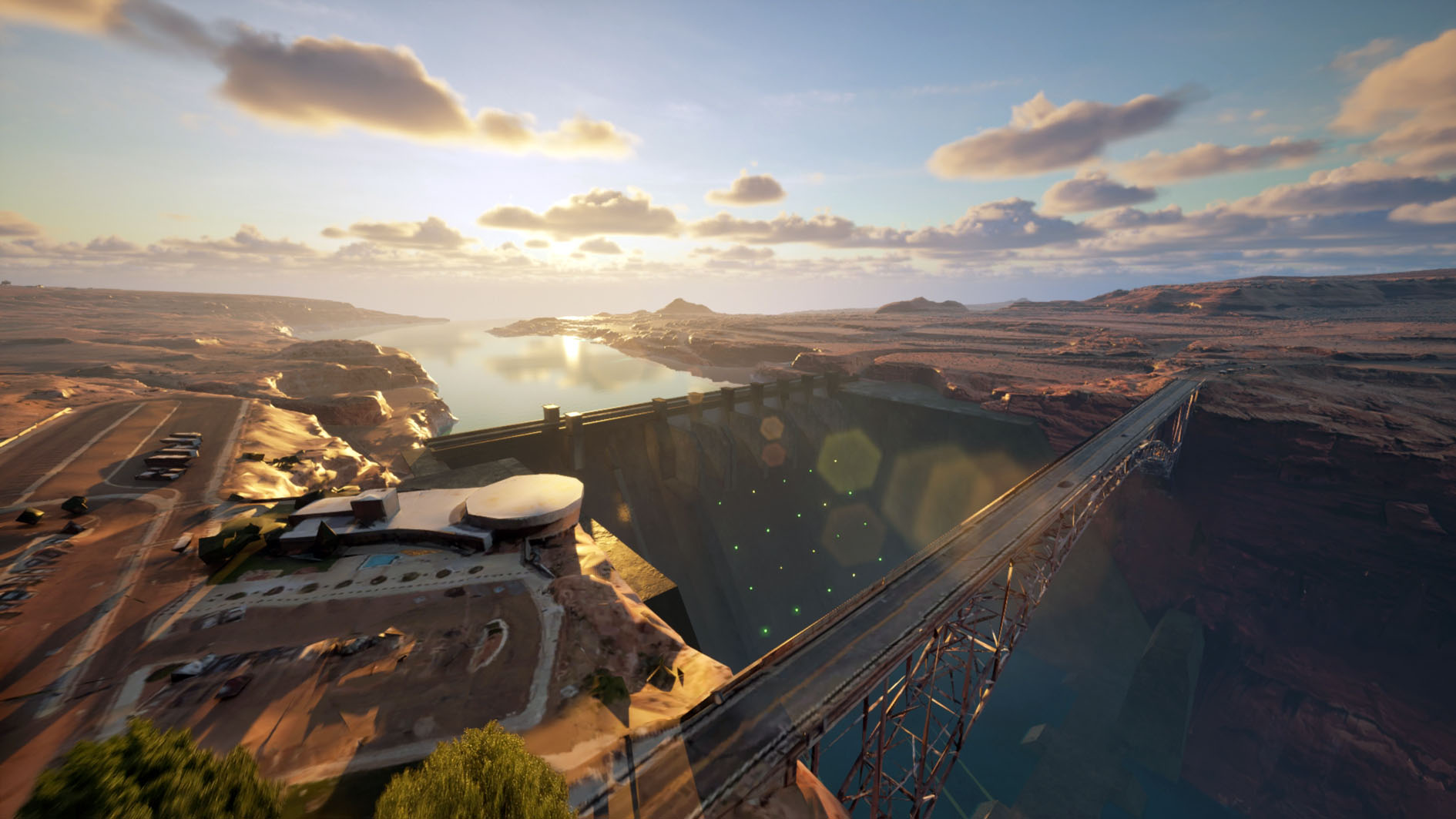
This is post 1 of “50 Ways MetaWorldX Physical AI Is Transforming the World.”
Critical infrastructure is expected to operate continuously, safely, and efficiently. Bridges must carry growing traffic volumes. Water mains must withstand pressure, age, and changing environmental conditions. Power substations must remain stable during demand spikes and extreme weather. Tunnels, airports, ports, and hospitals cannot afford unexpected failures.
Yet many infrastructure organizations still rely on fixed maintenance schedules, manual inspections, and disconnected operational systems. These approaches can identify deterioration only after it becomes visible: or after an asset has already failed.
Predictive maintenance changes that model. By combining IoT data, artificial intelligence, 3D simulation, and operational expertise, MetaWorldX Physical AI helps infrastructure teams identify emerging risks, understand their consequences, and determine the most effective response before disruption occurs.
The maintenance challenge: infrastructure fails in complex ways
Infrastructure degradation rarely follows a simple pattern. A bridge bearing may deteriorate faster because of traffic loads, temperature cycles, or corrosion. A water main may fail because of pressure fluctuations, soil movement, age, and material fatigue. A transformer may show subtle signs of overheating long before an outage.
Traditional maintenance creates three persistent problems:
-
Reactive repairs are expensive.
Emergency closures, replacement parts, overtime labor, and service interruptions can cost significantly more than planned intervention. -
Scheduled maintenance is not always risk-based.
Replacing or inspecting every asset at the same interval may result in unnecessary work on healthy assets while higher-risk components receive insufficient attention. -
Operational data remains fragmented.
Sensor networks, SCADA systems, inspection records, work-order platforms, GIS maps, security systems, and building management systems often operate separately.
The result is an incomplete view of infrastructure health. Teams may have plenty of data but lack the shared context required to make timely decisions.
The central issue is not simply detecting failure. It is understanding what is likely to happen next: and what action will create the best outcome.

How MetaWorldX Physical AI enables predictive maintenance
MetaWorldX brings infrastructure data into an AI digital twin: a dynamic virtual representation of a physical asset, facility, or network that remains connected to real-world conditions.
Unlike a static 3D model, a digital twin can reflect current operating conditions, identify anomalies, test potential events, and support coordinated action.
1. Real-time monitoring through IoT integration
The MetaWorldX Physical AI platform can integrate with existing IoT devices and sensor networks rather than requiring organizations to replace their technology stack.
Depending on the asset, relevant data may include:
- Vibration and acceleration
- Structural strain and displacement
- Temperature and humidity
- Pressure and flow
- Corrosion and crack activity
- Electrical load and equipment temperature
- Traffic volumes and vehicle weights
- Acoustic signals associated with leaks
- Weather and environmental conditions
This information is visualized within a shared 3D environment. Operators can move from a city-wide or campus-level view to a specific asset, component, or sensor reading.
That context matters. A temperature anomaly is more useful when an engineer can see the affected transformer, understand its operating history, review nearby conditions, and assess how a failure could affect the wider network.
2. Predictive analytics identifies emerging failures
Predictive analytics uses historical and real-time information to identify patterns associated with deterioration or failure.
For example, the platform may detect:
- A gradual increase in bridge vibration
- Pressure transients indicating a developing water-main problem
- Repeated overheating in a substation component
- Abnormal pump performance at a treatment facility
- Equipment behavior that differs from its normal operating profile
The system can support anomaly detection, risk scoring, failure forecasting, and remaining-useful-life estimation. These insights help maintenance teams move from “inspect everything on a schedule” to “prioritize the assets most likely to create operational or safety consequences.”
3. Prescriptive analytics recommends the next best action
Prediction alone is not enough. Infrastructure leaders also need to know how to respond.
Prescriptive analytics evaluates possible interventions and recommends actions based on variables such as:
- Safety and reliability risk
- Service disruption
- Crew availability
- Spare-parts requirements
- Budget constraints
- Weather conditions
- Traffic patterns
- Dependencies between assets
- Regulatory or operational requirements
A recommendation might be to inspect a component within 48 hours, reduce loading temporarily, replace a part during a planned outage, or reroute traffic and services before beginning repair work.
Predictive analytics answers, “What may happen?” Prescriptive analytics answers, “What should we do about it?”
3D simulation turns maintenance decisions into scenario planning
Critical infrastructure does not operate as a collection of isolated assets. A single failure can affect transportation, energy, water, communications, public safety, and surrounding communities.
MetaWorldX uses real-time 3D simulation to help teams test the consequences of different maintenance and failure scenarios before acting in the physical world.
Teams can evaluate questions such as:
- What happens if a bridge lane is closed during peak traffic?
- Which water-main valves should be isolated to minimize customer impact?
- How would a substation failure affect nearby facilities?
- What is the safest repair sequence during severe weather?
- How can emergency vehicles access an affected tunnel or airport zone?
- Which maintenance window creates the lowest operational risk?
This capability supports comprehensive scenario planning for both routine maintenance and high-consequence events. Engineers, operators, emergency managers, and executives can work from the same visual model instead of interpreting separate reports and disconnected dashboards.
MetaWorldX’s work on the Toronto Digital Twin illustrates this broader approach. By integrating traffic, environmental, infrastructure, and public-safety data, the model supports improved emergency response and coordinated urban decision-making.
Concrete example: predictive maintenance for a city water-main network
Consider a regional water utility responsible for hundreds of kilometres of water mains, pumping stations, reservoirs, and treatment assets.
The utility has pressure sensors and flow meters already installed, but data is distributed across multiple systems. Maintenance teams typically respond to visible leaks, customer complaints, or sudden pressure loss. This creates emergency repair costs, road closures, water loss, and service interruptions.
A MetaWorldX AI digital twin could connect:
- Pressure and flow sensors
- Acoustic leak-detection devices
- Pump and valve data
- GIS and 3D network models
- Weather and soil conditions
- Asset age and material records
- Inspection histories
- Work orders and maintenance schedules
The platform detects a pressure signature that differs from the network’s normal behavior. Predictive analytics assigns a higher failure probability to a specific pipe segment. Prescriptive analytics then evaluates several options:
- Continue monitoring the segment.
- Dispatch an inspection crew.
- Isolate the pipe during a low-demand period.
- Replace the segment as part of a nearby road project.
- Adjust flows temporarily to reduce stress while repairs are organized.
The 3D simulation shows the likely impact of each option, including affected customers, traffic disruption, alternate supply routes, crew access, and downstream pressure.
The final decision remains with qualified personnel. The platform provides evidence, forecasts, and recommended actions, while engineers and operations leaders apply local knowledge, regulatory requirements, and human judgment.
This is human-in-the-loop governance: AI accelerates analysis and coordination without removing accountability from the people responsible for public infrastructure.

Measuring ROI: less downtime, lower costs, stronger resilience
The business case for predictive maintenance combines direct savings with avoided disruption.
Industry research commonly reports potential improvements in the following ranges when organizations combine IoT, AI, and digital twin technology:
- 20–50% reduction in unplanned downtime
- 10–40% reduction in maintenance expenses
- 10–20% extension of equipment or asset life
- Improved fault-detection accuracy and maintenance planning
Actual results depend on asset criticality, data quality, sensor coverage, operational maturity, and the effectiveness of integration. These figures should therefore be treated as planning benchmarks rather than guarantees. Research on predictive maintenance and digital twins is available through the IEEE Computer Society and peer-reviewed digital twin studies such as this ScienceDirect research publication.
A simple business case can include:
- Avoided emergency repair costs
- Reduced service interruptions
- Fewer road, tunnel, airport, or port closures
- Lower labor and truck-roll expenses
- Reduced water or energy loss
- Longer asset replacement cycles
- Better prioritization of capital projects
- Improved safety and regulatory performance
For example, if a utility spends $10 million annually on maintenance and a predictive program reduces avoidable maintenance expenditure by 20%, that represents a potential $2 million in annual savings before accounting for avoided outage impacts. If the same program prevents several major service interruptions, the value can be substantially higher.
The strongest ROI often comes from prioritizing high-criticality assets first: such as major bridges, trunk water mains, airport systems, hospital utilities, port equipment, and power substations.
Integration with the systems organizations already use
Predictive maintenance cannot succeed as a standalone dashboard. It must fit into existing operational processes.
MetaWorldX is designed to integrate with systems such as:
- PSIM platforms
- Access-control systems
- Building management systems
- SCADA and industrial-control environments
- IoT and sensor networks
- GIS and BIM models
- Computerized maintenance management systems
- Emergency-management and command-center tools
This integration creates a connected operational picture. A predicted equipment failure can be associated with access permissions, nearby cameras, security conditions, work orders, maintenance crews, and emergency procedures.
The same approach supports airports, hospitals, ports, large property developments, energy facilities, and smart city environments. MetaWorldX’s critical infrastructure solution is built around real-time monitoring, predictive insights, resource management, and climate-impact analysis.
The NEOM digital twin project further demonstrates how real-time sensor, camera, and IoT data can support command-and-control operations, emergency scenario planning, and proactive decision-making.

A practical path to implementation
Organizations can begin with a focused, measurable deployment:
-
Identify high-value assets.
Prioritize infrastructure where failure creates the greatest safety, financial, or public-service consequences. -
Assess existing data.
Map available IoT, SCADA, inspection, GIS, BIM, maintenance, and environmental data. -
Create the digital twin foundation.
Build or connect the 3D model and establish the relevant asset relationships. -
Deploy predictive models.
Begin with anomaly detection and risk scoring, then expand to failure forecasting and remaining-useful-life analysis. -
Add prescriptive workflows.
Connect recommendations to maintenance planning, emergency procedures, and operational approvals. -
Track outcomes.
Measure downtime, response times, maintenance costs, inspection efficiency, prediction lead time, and avoided failures.
This phased approach reduces implementation risk while creating a clear path from pilot project to network-wide infrastructure intelligence.
The future of infrastructure management is proactive
Critical infrastructure management is moving from periodic inspection to continuous understanding. The combination of digital twin technology, IoT, predictive analytics, prescriptive analytics, and real-time 3D simulation gives decision-makers a more complete way to protect essential systems.
For governments, infrastructure operators, airports, hospitals, ports, and smart city developers, the opportunity is not simply to repair assets faster. It is to anticipate risk, coordinate response, extend asset life, and invest with greater precision.
The future-ready infrastructure organization will not wait for failure to reveal what it should have known.
Explore the MetaWorldX Physical AI platform to learn how AI digital twins can support predictive maintenance, resilient operations, and smarter infrastructure decisions.