
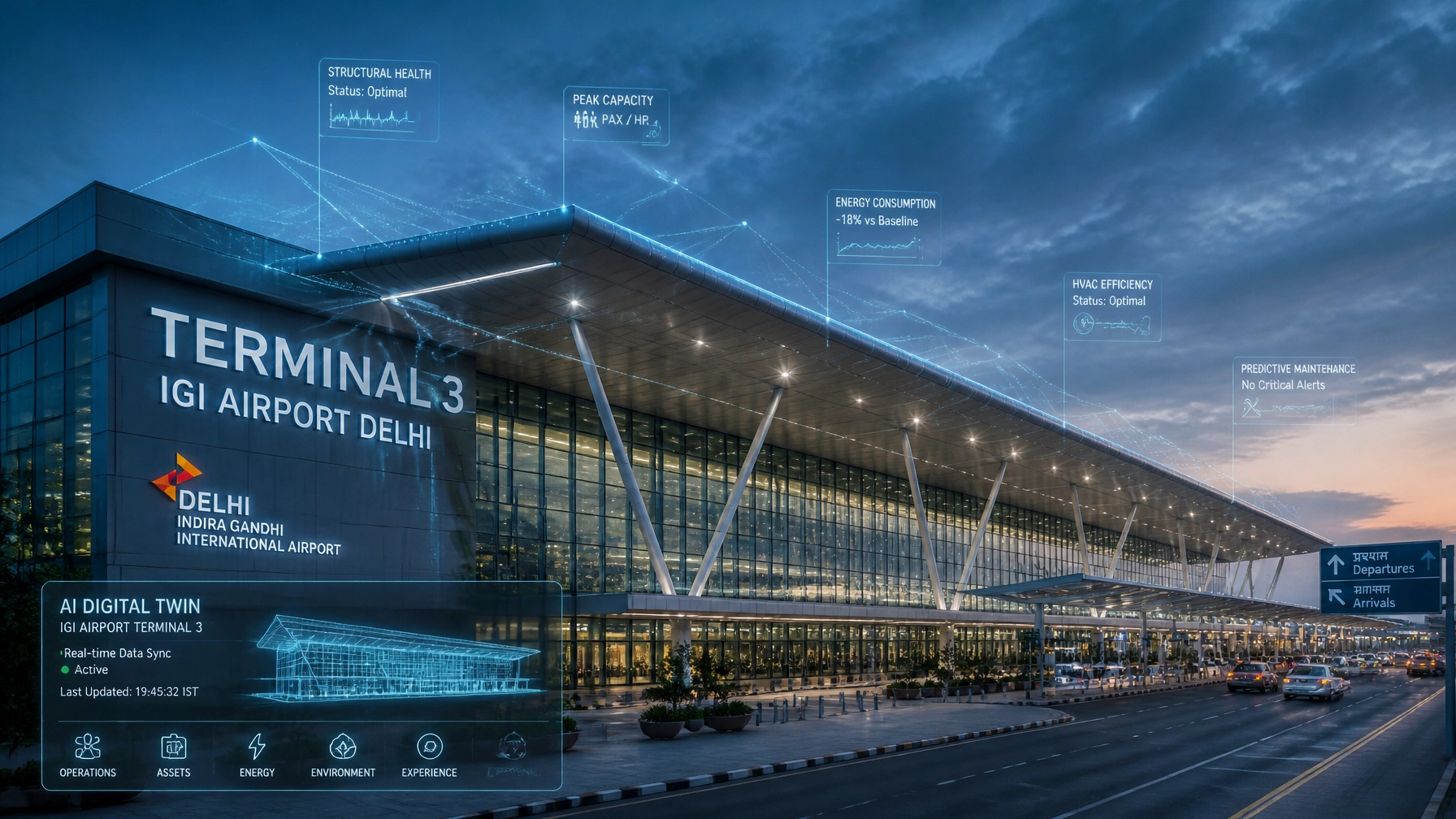
Indira Gandhi International Airport (DEL) stands as a testament to India’s rapid urban and economic evolution. As of July 2026, it remains the 11th busiest airport globally, facilitating the movement of over 78 million passengers annually. Navigating such a colossal hub can be daunting for even the most seasoned traveler. However, with a clear understanding of its terminal architecture, the new 2026 transit protocols, and the cutting-edge AI digital twin technology orchestrating the chaos behind the scenes, you can navigate DEL with unmatched efficiency.
The era of virtual cities is here. At MetaWorldX, we see DEL not just as an airport, but as a living, breathing data ecosystem. Through our work in smart cities, we understand that the future of travel lies in the seamless integration of physical infrastructure and digital intelligence.
Understanding the Three-Terminal Ecosystem
Indira Gandhi International is divided into three distinct terminals, each serving specific airline profiles and flight types. Knowing where you are landing or departing from is the first step to a stress-free journey.
- Terminal 1 (T1): Traditionally the home of domestic low-cost carriers (LCCs), T1 serves major players like IndiGo, SpiceJet, and Akasa Air. Following its 2025 expansion, it now handles a significant portion of the city's domestic volume with a streamlined, high-capacity design.
- Terminal 2 (T2): Currently focused on domestic operations, T2 acts as a vital relief terminal for Air India Express and select IndiGo flights. It is essential to check your ticket carefully, as airlines often split operations between T1 and T2.
- Terminal 3 (T3): The crown jewel of the airport. This 5.4 million sq. ft. integrated terminal manages all international operations and serves as the hub for full-service domestic carriers like Air India and Vistara.
The right terminal makes the difference. Always confirm your terminal via your airline’s mobile app at least 24 hours before departure, as terminal assignments can shift based on operational capacity.
The 2026 Revolution: Seamless Inter-Terminal Transfers
Historically, transferring between T1 and T3 required a lengthy landside journey, involving exiting the terminal and re-clearing security. As of July 2026, a transformative shift in airport logistics has arrived.
New Airside Inter-Terminal Buses
Phased in this month, the new airside inter-terminal shuttle system allows transit-verified passengers to move between T1, T2, and T3 without exiting the secure zone. This reduces transfer times by nearly 60%, removing the need for a second security screening for those on through-tickets.
24/7 Landside Shuttles
For travelers on separate tickets or those who need to collect baggage before their next leg, the free 24/7 landside shuttle remains the standard.
- Frequency: Every 20 minutes.
- Requirement: Visit the Inter-terminal Transfer Counter to obtain a complimentary bus coupon by showing your connecting flight ticket.
- Timing: Allow at least 45 minutes for the transfer itself, though 4-5 hours is recommended for the total connection window if you must exit and re-enter.

The Tech Powerhouse: MetaWorldX AI Digital Twins
Behind the glass and steel of Terminal 3 lies a sophisticated "digital brain." The management of 1,400+ daily flights requires more than just human oversight; it requires digital twin technology for airports. MetaWorldX has been at the forefront of this revolution, demonstrating how AI for airport operations can turn a logistical nightmare into a choreographed performance.

Optimizing Passenger Flow
The MetaWorldX digital twin creates a real-time 3D simulation of Terminal 3’s floor plan. By integrating IoT sensors and video analytics, the system identifies "hot zones" where crowds gather. If a bottleneck forms at security or immigration, the AI predicts the impact 30 minutes into the future, allowing management to redeploy staff before the line even begins to swell.
Predicting Baggage Bottlenecks
One of the most significant stressors for travelers is baggage delay. The MetaWorldX smart airport solution monitors the mechanical health and throughput of kilometers of conveyor belts. By analyzing historical data and current flight loads, the AI predicts potential mechanical failures or overflows, ensuring that baggage moves as swiftly as the passengers.
HVAC and Environmental Efficiency
Managing the climate of a 5.4 million sq. ft. space is an immense challenge. The digital twin monitors air quality and temperature in real-time across T3’s massive footprint. This doesn't just ensure passenger comfort; it optimizes energy consumption, supporting DEL's commitment to sustainability by reducing the carbon footprint of massive cooling systems.
AI Airport Security and Flight Management
Security is the cornerstone of critical infrastructure. The AI digital twin integrates with the airport's security ecosystem to provide a comprehensive, 360-degree view of operations. From monitoring unauthorized access points to coordinating the ground handling of over a thousand daily flights, the digital twin ensures that safety and efficiency are never compromised.
Transit Secrets: Metro and DigiYatra
Efficiency at DEL isn't just about the technology behind the scenes; it’s about the tools available to you, the traveler.
1. The Airport Express Metro (Orange Line)
To reach the heart of New Delhi in record time, head to the T3 basement. The Airport Express Metro connects you to the New Delhi Railway Station in just 20 minutes. It is clean, reliable, and arguably the most efficient airport-to-city link in the world.
- Pro Tip: If you are departing from T1, use the Magenta Line, which features a dedicated station for the domestic terminal.

2. DigiYatra: Your Face is Your Boarding Pass
For domestic travelers, DigiYatra is a game-changer. By pre-registering your biometrics on the DigiYatra app, you can breeze through terminal entry and security checkpoints using facial recognition.
- Where to find it: Dedicated lanes are available at T1 and T3.
- Benefit: This can reduce your terminal entry time from 15 minutes to 15 seconds.
Professional Travel Strategy for 2026
To master Delhi Airport, follow these assertive arrival guidelines:
- Arrive Early: 3 hours for international departures; 2 hours for domestic.
- Verify the Terminal: Use the airline app to check for last-minute gate or terminal changes.
- Use the Metro: Avoid the notorious Delhi traffic by utilizing the Orange or Magenta lines whenever possible.
- Leverage Digital Tools: Register for DigiYatra and use the airport’s official app to track real-time queue wait times, powered by AI analytics.
Preparation is the ultimate travel luxury. By understanding the terminal layout and utilizing the available tech, you move from being a passive passenger to an active navigator of this global hub.
Conclusion: The Future of the Connected Hub
The transformation of Indira Gandhi International Airport into a tech-driven powerhouse is a glimpse into the future of urban mobility. Through the implementation of digital twin technology, airports are evolving from static transit points into dynamic, responsive environments.
At MetaWorldX, we are proud to lead the charge in creating these AI-powered ecosystems, ensuring that as our cities grow, they become more resilient, efficient, and passenger-friendly. Whether you are catching a short-haul flight from T1 or embarking on an international journey from T3, remember that a complex symphony of AI and human ingenuity is working to get you to your destination on time.
Are you ready to see how digital twins can transform your infrastructure? Explore MetaWorldX’s solutions today and join us in building the smart cities of tomorrow.