
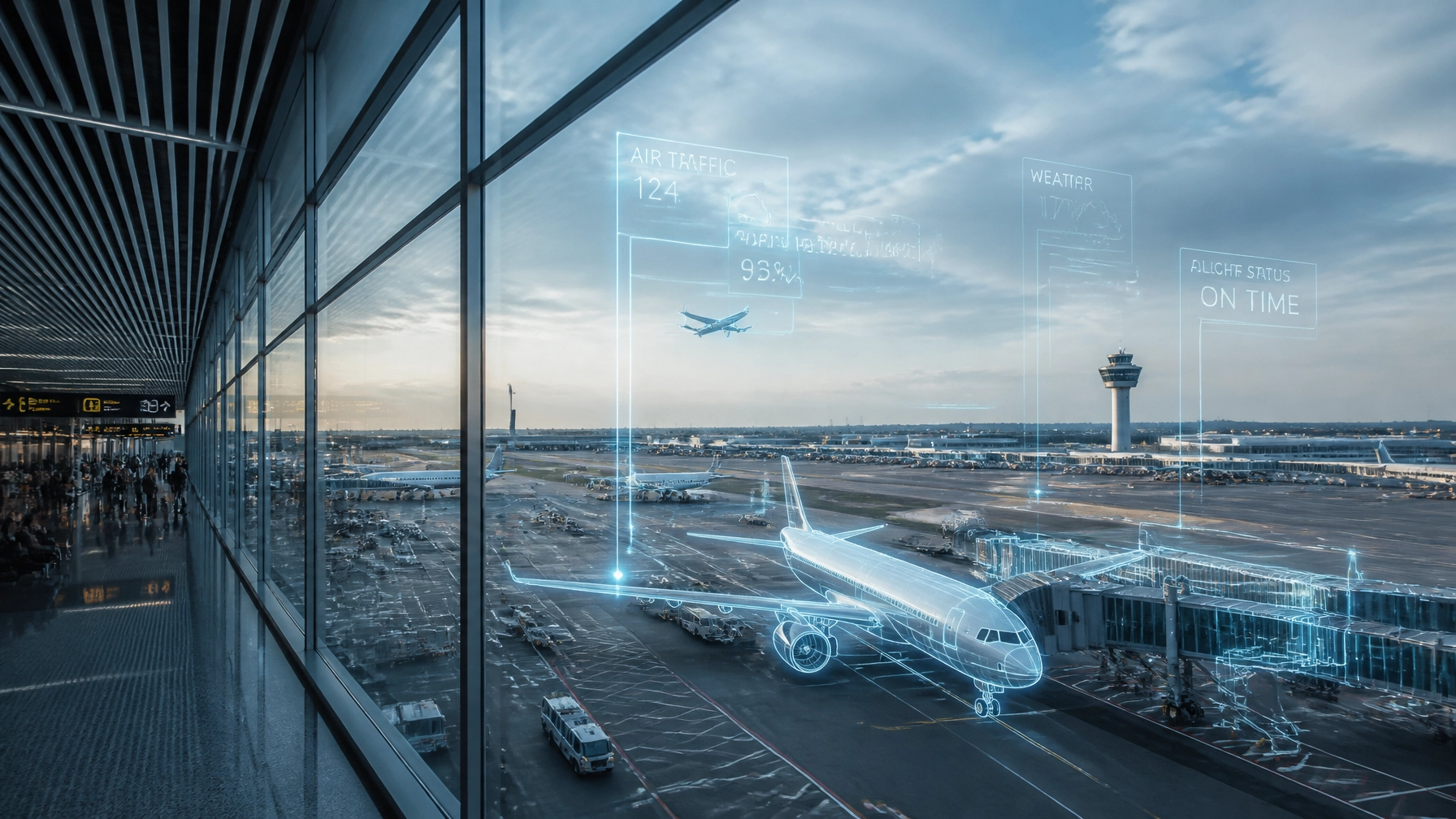
As one of Southeast Asia’s busiest and most vital aviation hubs, Bangkok Suvarnabhumi Airport (BKK) welcomes tens of millions of travelers every year. Whether you are stepping off a long-haul flight, embarking on a regional connection, or exploring Thailand for the first time, mastering this architectural marvel requires insider knowledge. Beyond check-in counters and security lines lies a world-class facility featuring hidden gems like the 7th-floor observation deck: and, increasingly, a sophisticated technological backbone operating silently behind the scenes.
In this comprehensive guide, we explore everything you need to navigate BKK like a seasoned pro, while uncovering how cutting-reminiscent AI digital twin airports are redefining the future of global aviation.
1. Mastering the BKK Terminal Layout: A Level-by-Level Breakdown
Suvarnabhumi Airport’s main passenger terminal is organized into a streamlined, multi-level structure designed to handle massive passenger volumes smoothly. Understanding this layout before you land or arrive is the key to stress-free transit.
- Level 2 (Arrivals): Your entry point for international and domestic arrivals, housing immigration control, baggage reclaim, customs, and currency exchange booths.
- Level 3 (Connection & Retail): The central transit zone offering access to airport hotels, lounges, transportation connections, and select retail shops.
- Level 4 (Departures): The bustling heartbeat of the terminal, featuring check-in counters A through W, passport control, VAT refund kiosks, and extensive duty-free shopping.
- Level 6 (Dining & Lounges): A quieter culinary floor offering a diverse array of restaurants, cafes, and airline lounges.
- Level 7 (Observation Deck): A peaceful panoramic vantage point overlooking the runways and aprons, ideal for aviation enthusiasts and weary travelers seeking quietude.
Navigating a major global hub like BKK requires precision, foresight, and an understanding of spatial flow.
2. Practical Travel Tips for Check-In, Security & Connections
Maximizing efficiency at Suvarnabhumi comes down to timing and strategic routing.
- Arrive Early for International Flights: Given BKK’s scale, international departures typically require arrival at least three hours before scheduled departure.
- Utilize Self-Service Kiosks: Leverage automated check-in and bag-drop kiosks on Level 4 to bypass lengthy queues during peak morning and evening banks.
- Streamline Security and Immigration: Keep boarding passes and travel documents readily accessible. Fast-track lanes are available for premium cabin passengers and eligible frequent flyers.
- Seamless Transfer Corridors: If you are connecting flights, follow the glowing pink or green transfer signs on Level 2 or Level 3 to complete security screening without exiting immigration.
Efficient transit is the hallmark of a world-class travel experience.
3. Discovering the 7th-Floor Observation Deck

For plane spotters, photography enthusiasts, and passengers seeking a quiet retreat during a long layover, the 7th-floor observation deck is BKK’s best-kept secret.
How to Find the Observation Deck
- Head to Departures (Level 4): Walk toward the rear of the check-in hall, behind check-in rows P and Q near Exit 8.
- Locate the Access Elevators: Find the designated elevators situated near counter Q.
- Ascend via Level 6: Take the elevator up to Level 6, then follow the architectural signs up the interior stairs or ramp to Level 7.
What to Expect on Level 7
- Quiet Atmosphere: Far removed from the bustling crowds of Level 4, this low-traffic zone offers comfortable seating benches and a calm environment.
- Runway Views: Large steel-and-glass structural frames offer sweeping views of the main apron and active runways, making it a favorite for capturing aircraft takeoffs and landings.
- Connectivity: Full coverage by the airport's high-speed Wi-Fi network ensures you stay connected while enjoying the view.
The era of virtual cities and smart infrastructure begins with spaces designed for both operational excellence and human comfort.
4. Behind the Scenes: How the MetaWorldX Digital Twin Powers Modern Airports
While travelers enjoy amenities like the observation deck, airport operators face the monumental challenge of managing millions of square feet of critical infrastructure in real-time. This is where cutting-edge innovation steps in. As a pioneer in spatial intelligence, the MetaWorldX digital twin platform is transforming how mega-airports like BKK monitor, simulate, and optimize their daily ecosystems.
Emergency Response Optimization
In high-stakes environments, every second counts. Traditional crisis management relies on static floor plans and reactive communication. With AI for airport operations, command centers can simulate complex emergency scenarios: such as terminal fire drills, security breaches, or medical emergencies: within a hyper-realistic 3D virtual replica before they occur in reality.
- Faster Decision-Making: Simulated testing empowers emergency response teams to refine evacuation routes and resource deployment.
- Measurable Impact: Advanced AI simulations have proven capable of reducing overall emergency response times by up to 20%, safeguarding millions of passengers.
Predictive Maintenance and Passenger Flow
Managing baggage systems, HVAC units, escalators, and boarding gates across a sprawling terminal requires unprecedented foresight. By integrating Internet of Things (IoT) sensors with advanced analytics, digital twin technology airports transition from reactive repairs to predictive maintenance.
- Eliminating Bottlenecks: Real-time heatmaps track passenger density across security checkpoints, retail zones, and boarding gates, allowing operations teams to dynamically redirect personnel and alleviate congestion.
- Asset Longevity: Predictive models forecast equipment wear and tear, scheduling maintenance before mechanical failures disrupt flight schedules.
To explore how our enterprise solutions empower global operators, visit our MetaWorldX Services and discover our visionary approach detailed on our MetaWorldX About Page.
5. Elevating Security and Operational Efficiency

Modern aviation security extends far beyond physical checkpoints. Protecting a global transport gateway requires unified situational awareness across physical, digital, and environmental vectors.
Advanced AI Airport Security Integration
A MetaWorldX smart airport ecosystem seamlessly integrates existing security infrastructure: including Physical Security Information Management (PSIM) software, CCTV feeds, access control systems, and biometric scanners: into a single, unified pane of glass.
- Automated Threat Detection: Computer vision algorithms flag abandoned luggage, unauthorized perimeter breaches, or crowd anomalies instantly.
- Cross-System Synergy: Security teams can coordinate with local law enforcement and medical staff through shared, real-time spatial visualizations, eliminating communication silos.
Building Resilient Smart Cities and Aviation Hubs
Airports do not operate in isolation; they function as the pulsating hearts of wider urban ecosystems. From mega-developments in Dubai to regional transport hubs across Asia, leaders are turning to AI digital twin airports to future-proof their operations. Learn more about our regional impact and visionary urban projects by visiting our MetaWorldX Dubai Hub or browsing our latest insights on the MetaWorldX Blog.
6. The Future of Global Aviation is Virtual and Intelligent
Navigating Bangkok Suvarnabhumi Airport (BKK) reveals a fascinating intersection of seamless human travel and invisible digital mastery. From discovering the tranquil 7th-floor observation deck to experiencing the profound impact of real-time spatial intelligence, modern aviation is evolving at an unprecedented pace.
As airports grow larger and more complex, the integration of advanced spatial platforms ensures that safety, efficiency, and passenger satisfaction remain paramount. The future of global connectivity is intelligent, interconnected, and fully optimized.
Explore our whitepapers and discover how MetaWorldX is shaping the future of intelligent infrastructure by visiting the MetaWorldX Whitepaper Library.