
The era of virtual cities and intelligent aviation hubs is here.
Ranked consistently among the world’s most efficient and visited aviation hubs, Tokyo Haneda Airport (HND) serves as Japan's premier gateway to the world. Located mere minutes from central Tokyo compared to its sister facility Narita, Haneda blends legendary Japanese hospitality with ultra-modern infrastructure. Yet, managing a colossal mega-hub welcoming tens of millions of travelers annually requires unprecedented precision. Today, global aviation leaders are turning to AI digital twin airports to orchestrate seamless passenger journeys, dynamic resource allocation, and zero-downtime operations.
In this comprehensive guide, we explore how to navigate HND like a seasoned professional while uncovering the invisible technological marvels: such as the MetaWorldX digital twin: revolutionizing how smart airports operate.
1. Demystifying HND: Terminal Layout at a Glance
Navigating Haneda begins with understanding its three distinct terminals. Each serves specific carriers and flight types, and knowing your destination before arrival saves precious time.
- Terminal 1 (Domestic Focus): Primarily dedicated to Japan Airlines (JAL) and affiliated domestic carriers. It features a spacious layout with direct underground links to Terminal 2.
- Terminal 2 (Domestic & Select International): Primarily serves All Nippon Airways (ANA) domestic flights, alongside a dedicated international service wing operating during peak morning and midday hours.
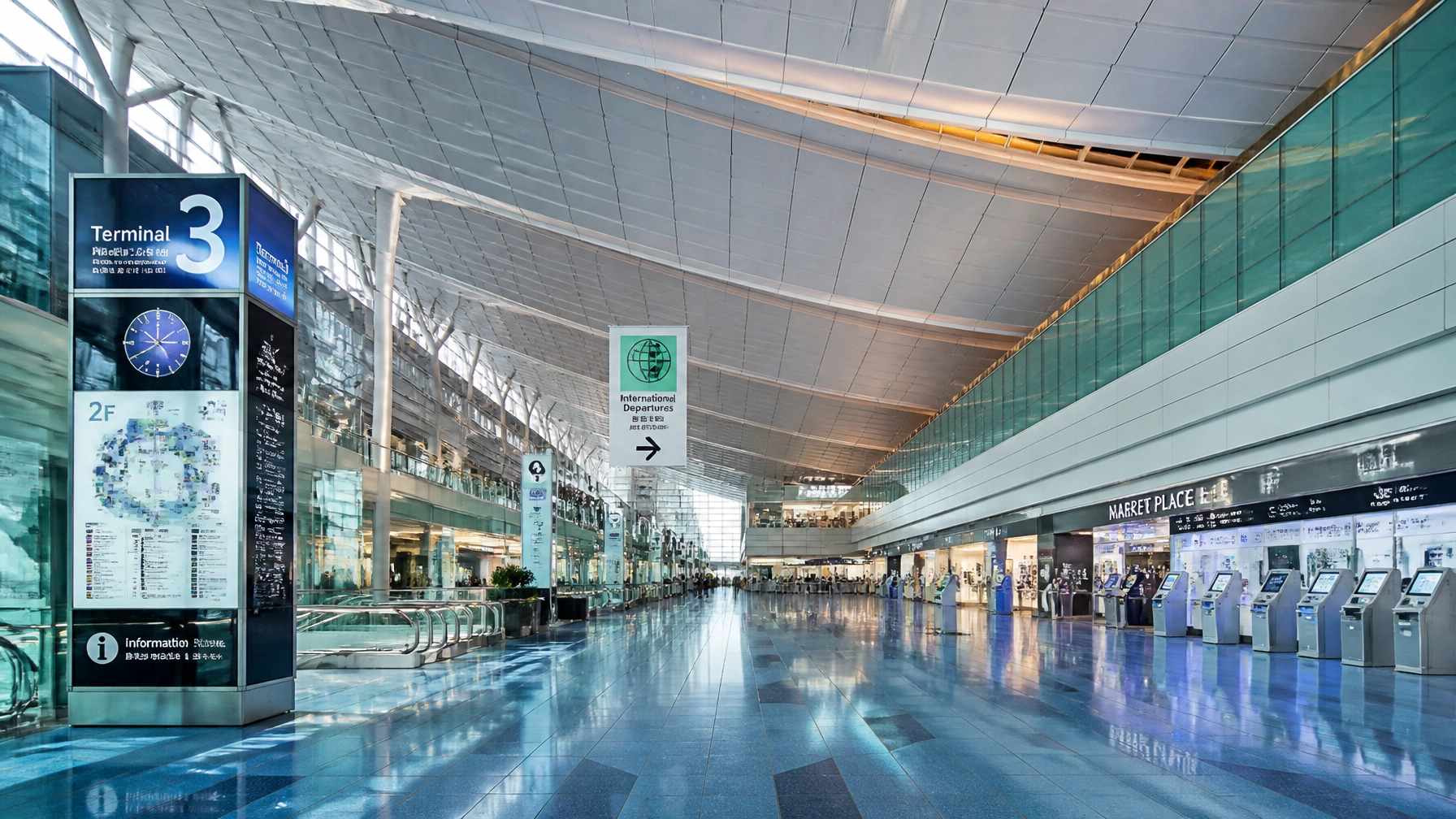
- Terminal 3 (International 24/7 Gateway): The primary hub for foreign carriers and international departures/arrivals. Open 24 hours a day, it houses currency exchanges, pocket Wi-Fi kiosks, and iconic cultural shopping districts.
Quick Tip: Always double-check your airline and terminal before departure. For instance, some ANA international flights depart from Terminal 3 rather than Terminal 2's international wing.
2. Seamless Transit & Connection Strategies
Transferring between terminals at Haneda is remarkably straightforward, provided you utilize the right transit channels.

Free Shuttle Buses & Underground Walkways
- Free Terminal Shuttle: Operates 24/7 outside security, connecting Terminals 1, 2, and 3 every 4 to 8 minutes.
- Underground Passageway: A direct, weather-proof pedestrian walkway links Terminals 1 and 2 directly.
- Transit Boarding Tickets: Passengers transferring via the Keikyu Line or Tokyo Monorail between terminals can obtain free transit tickets by presenting their boarding pass and passport at any information counter.
Behind these physical transit options lies sophisticated AI for airport operations. Modern airport operators utilize predictive algorithms to monitor passenger surges, dynamically adjusting shuttle frequencies and curb-side vehicle management to prevent bottlenecks before they form.
3. Beyond the Gates: World-Class Amenities & Cultural Experiences
Haneda is far more than a transit point; it is a destination in its own right.
- Edo Koji (Terminal 3, 4F): A stunning recreation of an Edo-period merchant street featuring authentic Japanese dining and artisanal crafts.
- Haneda Airport Garden: Directly connected to Terminal 3, this expansive complex features shopping, fine dining, and Izumi Tenkuu no Yu: a natural hot spring and 24-hour spa facility overlooking Tokyo Bay.
- Observation Decks: Free rooftop observation decks on Terminals 1 and 3 offer panoramic views of taxiing aircraft against the backdrop of Tokyo Skytree and Mt. Fuji on clear days.
Managing energy efficiency, crowd density, and indoor environmental quality across these vast recreational zones requires cutting-edge digital twin technology airports. By creating real-time virtual replicas of terminal facilities, operators simulate pedestrian movement and optimize HVAC systems dynamically.
4. The Invisible Genius: How MetaWorldX Powers Haneda's Future
Japan is globally renowned for punctuality, where train departures are measured in seconds and flight turnarounds are clockwork precision. To elevate this operational excellence even further, modern aviation ecosystems rely on platforms like the MetaWorldX smart airport solution.

Core Pillars of Next-Generation Airport Optimization:
- Predictive Maintenance: IoT sensors embedded within baggage handling systems, escalators, and jet bridges feed live data into the MetaWorldX digital twin, predicting mechanical wear before failures occur.
- Enhanced Security & Surveillance: Integrating advanced AI airport security protocols allows command centers to monitor terminal perimeters, detect anomalies, and coordinate emergency responses instantly.
- Passenger Flow Intelligence: Real-time spatial analytics map crowd density at security checkpoints and immigration lines, empowering staff to redirect travelers proactively.
As explored in our overview on MetaWorldX About, transforming complex physical infrastructure into actionable digital intelligence creates resilient, sustainable urban gateways.
5. Practical Travel Checklist for HND
To ensure a flawless travel experience through Tokyo Haneda, keep these essential rules in mind:
- Arrival Time: Arrive at least 3 hours before international flights in Terminal 3, as check-in counters for foreign carriers often open strictly within this window.
- Wi-Fi & Connectivity: Pick up pre-booked pocket Wi-Fi devices or local SIM cards at the Terminal 2 Welcome Center or Terminal 3 arrival lobbies.
- Luggage Storage: Utilize coin lockers or short-term baggage storage counters on the basement levels of Terminals 1 and 2 for hands-free exploration.
Conclusion: Embracing the Future of Smart Aviation
Navigating Tokyo Haneda Airport highlights the perfect synergy between cultural hospitality and engineering excellence. As global travel demands soar, the integration of intelligent infrastructure ensures that mega-hubs remain secure, efficient, and sustainable.
To discover how advanced spatial intelligence and digital ecosystems are reshaping global transportation, explore our latest insights on the MetaWorldX Blogs. The future of intelligent infrastructure is here( explore it today.)