
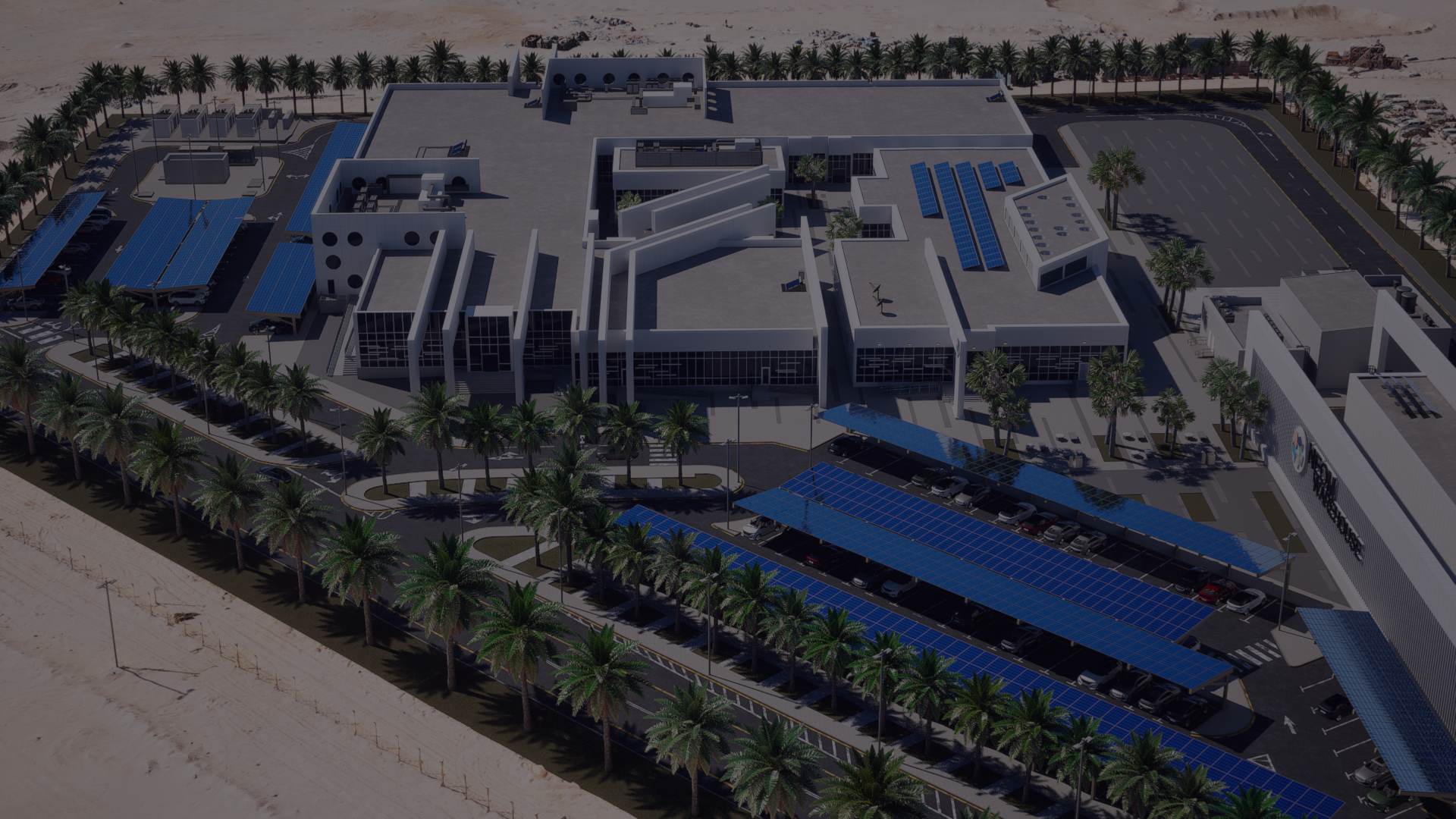
The era of context-aware building security is here.
Modern buildings generate enormous amounts of security data. Every badge swipe, door opening, camera alert, elevator movement, visitor registration, and sensor reading creates another event for security teams to review.
The challenge is not a lack of information. It is the lack of context.
A badge event may indicate an authorized employee arriving for an early shift, or an access credential being misused. A forced-door alarm may signal an intrusion, or a maintenance worker responding to an equipment fault. A camera may detect movement, but without understanding the surrounding access history, occupancy, and building conditions, operators are often left to investigate each signal manually.
MetaWorldX Physical AI transforms building security by connecting these events inside a living, AI-powered digital twin of the building. The result is a unified operational picture that helps security teams identify what is happening, understand why it is happening, and determine what to do next.
The Building Security Problem: More Events, Less Context
Traditional security environments often rely on multiple systems operating independently:
- Access control and badge management
- Physical Security Information Management (PSIM)
- Video management systems
- Building management systems (BMS)
- Fire and life-safety systems
- Visitor and contractor platforms
- IoT sensors and occupancy systems
Each platform may work effectively on its own. The problem emerges when an incident crosses system boundaries.
A door alarm may appear in one interface. The related video feed may be located in another. Badge records may sit in a separate database, while occupancy, elevator, and environmental data remain disconnected. Security officers must manually reconstruct the situation under pressure.
This creates several operational risks:
-
False positives consume attention.
Teams spend valuable time investigating alarms that have no security consequence. -
Badge events lack physical context.
A valid credential does not prove that the authorized person entered alone or moved through an expected route. -
Tailgating can go unnoticed.
One authorized access event may allow multiple people through a controlled door. -
Incident verification takes too long.
Operators may need to search across several systems before deciding whether to dispatch a guard or escalate an event. -
Audits become difficult.
Creating a complete, time-ordered record of who accessed which area, and what happened next, requires extensive manual effort.
For a mixed-use tower, hospital, airport, luxury development, or command and control center, fragmented security data can quickly become a serious resilience issue.
How MetaWorldX Physical AI Creates a Security Digital Twin
An AI digital twin is a continuously updated virtual representation of a real-world environment. In building security, that representation includes the physical structure, security assets, people flows, access permissions, and current operating conditions.
MetaWorldX Physical AI combines these elements in a navigable 3D environment that mirrors the building in real time.
The platform can integrate with existing:
- Access control and badge systems
- PSIM platforms
- Video management systems and camera analytics
- BMS and building automation systems
- IoT sensors, people counters, and door-position sensors
- Visitor, contractor, and identity-management systems
- Emergency notification and life-safety infrastructure
This approach does not require organizations to replace every system already in place. Instead, MetaWorldX provides an intelligent orchestration and visualization layer that makes existing investments more useful.
The security team can see a door, camera, alarm, occupant flow, and related event history in the correct physical location. The building becomes more than a floor plan or collection of dashboards. It becomes a live operational model.

From Alarm Monitoring to Predictive Security Operations
The value of a Physical AI platform extends beyond displaying events. MetaWorldX applies predictive and prescriptive analytics to help teams move from reactive monitoring to proactive risk management.
1. Correlating events across systems
Instead of treating each alert separately, the AI digital twin can correlate events based on time, location, identity, and operational conditions.
For example:
- A badge is used at a restricted laboratory door.
- The door remains open longer than expected.
- A camera detects two people entering.
- The second person does not generate a corresponding badge event.
- An elevator then travels to a controlled floor.
Individually, these events may not appear conclusive. Together, they create a higher-priority security scenario that deserves immediate verification.
2. Detecting anomalies in access behavior
MetaWorldX Physical AI can analyze badge and door-event streams to identify patterns that differ from normal behavior, including:
- Repeated denied-access attempts
- Unusual after-hours entry
- Access at geographically improbable times or locations
- A credential used in an unexpected sequence of zones
- Repeated use of service entrances
- Access attempts during unusual occupancy conditions
Predictive analytics can help security leaders understand where risk is increasing. The objective is not to label every anomaly as a threat. It is to direct human attention toward the events most likely to require investigation.
3. Identifying tailgating and unauthorized movement
Access control verifies a credential. It does not always verify how many people passed through a door.
When access events are combined with video analytics, occupancy sensors, and the building’s 3D model, the platform can help detect potential tailgating. It can associate the event with a precise door, camera, zone, and response workflow.
The operator receives context rather than a disconnected notification:
- Which credential opened the door
- How many people appeared to enter
- Whether the door remained open
- Where the group moved afterward
- Which cameras provide the best verification view
- What response procedure applies to that zone
This enables faster verification without requiring officers to manually search multiple screens.
Real-Time 3D Simulation for Security Scenario Planning
Security leaders need to prepare for more than a single intrusion. They must plan for overlapping events: a suspicious access attempt during a major event, a fire alarm during peak occupancy, a cyber-physical disruption, or an unauthorized person entering a sensitive area.
MetaWorldX supports comprehensive scenario planning through real-time 3D simulation.
Teams can model and evaluate scenarios such as:
- A restricted-floor breach
- Tailgating at a high-volume entrance
- A stolen badge used after hours
- A suspicious visitor moving between zones
- A lockdown affecting elevators and access points
- An evacuation with selected doors secured or released
- A security incident occurring alongside a BMS or life-safety event
Simulation allows decision-makers to test policies before applying them in the physical environment. They can compare guard routes, review camera coverage, identify bottlenecks, and evaluate how access restrictions might affect evacuation or business continuity.
This is especially valuable for airports, healthcare campuses, luxury developments, and large command and control centers, where small policy changes can affect thousands of occupants.

A Practical Example: Securing a Mixed-Use Tower
Consider a large mixed-use tower in Toronto or Dubai containing offices, residences, retail space, parking, restaurants, and premium amenities.
The building has separate access policies for tenants, residents, visitors, vendors, and staff. Security officers monitor thousands of daily badge events, while a property operations team manages elevators, HVAC, loading areas, and public spaces.
During a busy evening, the digital twin detects the following sequence:
- A contractor credential is used at a service entrance outside the approved schedule.
- The door remains open beyond the configured threshold.
- Video analytics identifies two people entering.
- One individual moves toward a restricted mechanical floor.
- An elevator call and occupancy sensor confirm movement in that direction.
- A nearby environmental sensor reports an unusual change in the service corridor.
Rather than presenting six unrelated alerts, MetaWorldX creates one contextualized incident. The operator sees the precise location in the 3D building model, the relevant video feeds, access history, occupant movement, and recommended response steps.
The officer can request verification, dispatch the nearest guard, temporarily restrict a zone, or escalate the incident according to established policy.
The model supports the decision. The security professional remains responsible for the decision.
Human-in-the-Loop Governance: AI That Strengthens Professional Judgment
Building security cannot be delegated blindly to an algorithm. A reliable security operation requires transparency, accountability, and clear human authority.
MetaWorldX Physical AI is designed to keep officers and security leaders in control. The platform can prioritize events, identify correlations, recommend actions, and simulate possible outcomes. Authorized personnel decide whether to:
- Dismiss an alert
- Request additional verification
- Dispatch a guard
- Restrict access to a zone
- Initiate a lockdown procedure
- Notify building management or emergency services
- Record the event for audit and follow-up
This human-in-the-loop governance model helps organizations use AI responsibly. It also improves trust because operators can understand why the system elevated an event and which data contributed to the recommendation.
For regulated environments such as hospitals, airports, and critical infrastructure facilities, that traceability is essential.

Measuring the Business and Security ROI
Building security optimization should produce measurable operational improvements. Depending on the facility and baseline performance, organizations can track:
- False alarm reduction: Fewer nuisance alerts reaching officers and managers
- Faster incident verification: Less time spent switching between systems
- Improved response times: Better dispatch decisions based on location and context
- Tailgating detection: More effective identification of unauthorized entry
- Reduced guard patrol costs: Risk-informed routes and more efficient deployment
- Audit-ready access trails: A unified record of identity, location, event, and response
- Improved policy testing: Security changes evaluated through simulation before deployment
- Better system utilization: Existing PSIM, access control, BMS, video, and IoT investments connected through one operational view
MetaWorldX projects demonstrate how digital twins can support real-time monitoring, predictive insights, and scenario-based decision-making. The NEOM digital twin connects sensors, cameras, IoT devices, predictive analytics, and emergency simulations for a critical command and control environment. The Dubai Airport digital twin similarly unifies operational, security, and infrastructure data to improve situational awareness.
The Future of Building Security Is Contextual
Access control is evolving beyond the question, “Was a credential accepted?”
The more important questions are:
- Who entered?
- Was the behavior consistent with the person’s role?
- Did more than one person pass through?
- What is happening in the surrounding space?
- Which systems confirm or contradict the alarm?
- What response is most appropriate now?
- How will the decision affect the rest of the building?
MetaWorldX Physical AI answers these questions by bringing people, assets, systems, and events into one intelligent digital twin.
For building owners, infrastructure operators, security directors, and command center leaders, the opportunity is clear: transform disconnected security data into coordinated awareness, faster decisions, and more resilient operations.
Explore the MetaWorldX Physical AI platform and discover how digital twin technology can help create safer, smarter, and more responsive buildings.