
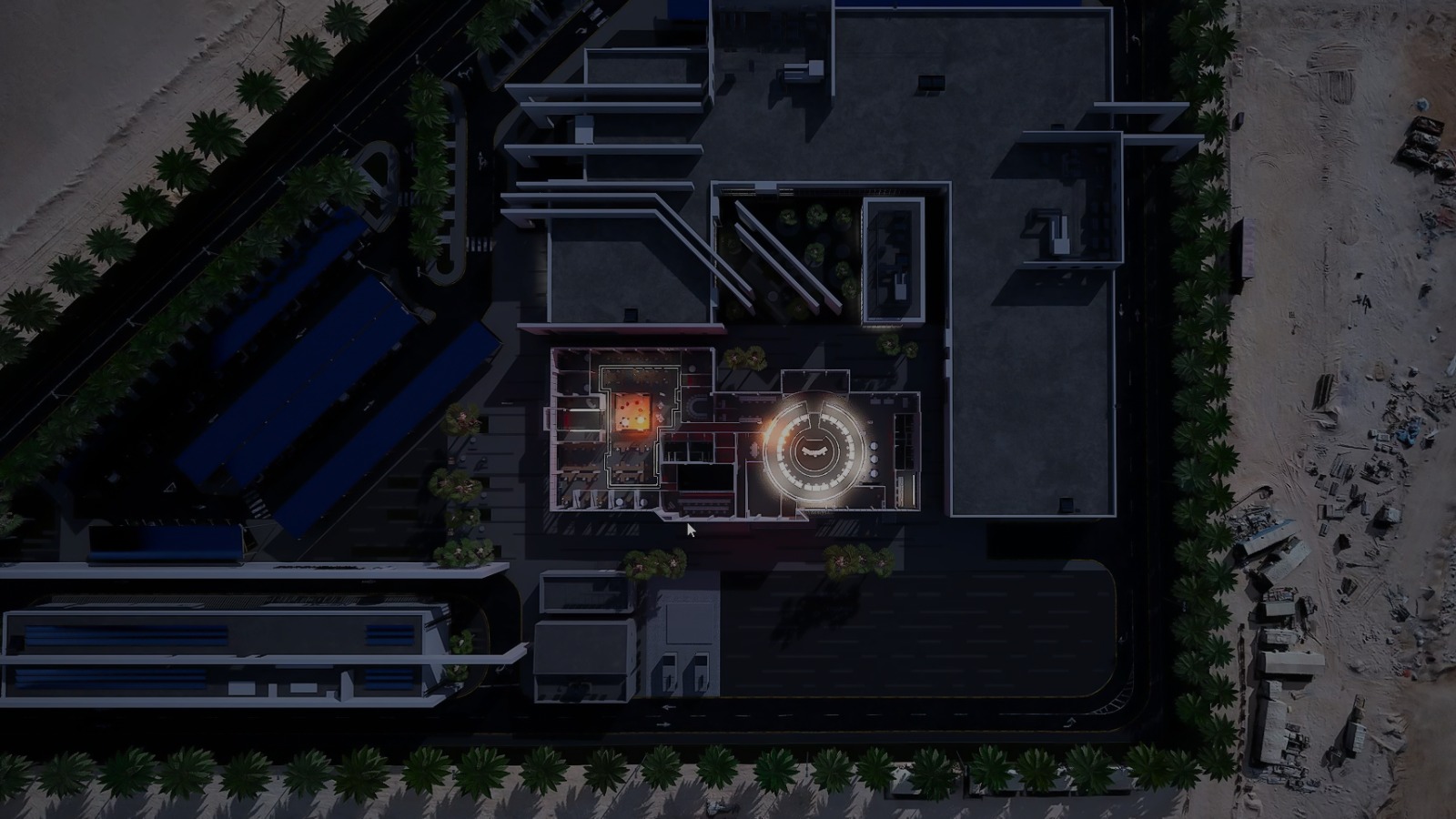
The era of static emergency plans is giving way to intelligent, continuously updated safety systems.
Fire emergencies evolve in seconds. Smoke can make familiar routes unsafe, crowds can shift unpredictably, and critical systems may behave differently under pressure. In airports, hospitals, stadiums, ports, high-rise buildings, and command centers, a safe response depends on more than alarms and evacuation maps. It requires a clear understanding of what is happening now: and what is likely to happen next.
This is where MetaWorldX Physical AI creates a new standard for public safety.
By combining an AI digital twin, real-time 3D simulation, IoT data, predictive analytics, and prescriptive decision support, MetaWorldX enables organizations to move from reactive fire response to proactive, intelligence-led emergency management.
The Challenge: Fire Safety Is a Dynamic, Multi-System Problem
Traditional fire safety planning is essential, but it often relies on static models:
- Predefined evacuation routes
- Periodic drills and inspections
- Fixed emergency procedures
- Separate fire detection, access control, and building management systems
- Manual coordination between security teams, facilities managers, and first responders
These approaches may not reflect the actual conditions during an incident.
A fire can block a corridor that was designated as the primary escape route. Smoke can spread through ventilation systems. Elevators may become unavailable. Occupancy levels may change throughout the day. In a hospital, many people may require assistance. At an airport or stadium, thousands of occupants may be unfamiliar with the building.
The central problem is not simply detecting fire. It is understanding how fire, people, infrastructure, and response teams interact in real time.
Research into digital twins for fire safety is already demonstrating the value of this approach. For example, a 2024 study from The Hong Kong Polytechnic University combined AIoT sensor data, deep learning, and a 3D digital twin to predict fire location and intensity while visualizing conditions for evacuation and rescue operations. The research is available through the PolyU Scholars Hub.
MetaWorldX extends this principle across complex buildings, infrastructure, and smart city environments.
What Is MetaWorldX Physical AI?
Physical AI applies artificial intelligence to real-world environments. Rather than analyzing data in isolation, it connects AI models to buildings, infrastructure, sensors, operating systems, and human decision-makers.
The MetaWorldX digital twin platform creates a dynamic, 3D representation of a physical environment. It can integrate:
- Building geometry and spatial data
- Fire detection and environmental sensors
- CCTV and occupancy information
- Building Management Systems (BMS)
- Access control and door status
- HVAC and ventilation systems
- Public Safety Information and Management (PSIM) platforms
- IoT networks and operational databases
- Traffic, weather, and city-scale infrastructure data
This creates a shared operational picture for facilities teams, security operators, emergency managers, and first responders.
Instead of viewing separate alarms on separate systems, decision-makers can see the incident spatially: where it started, how it is developing, which routes remain viable, where occupants are concentrated, and how response teams can reach the affected area.
From Detection to Prediction
Fire safety becomes more effective when organizations can anticipate how an incident will develop.
MetaWorldX applies predictive analytics to estimate:
-
Fire and smoke progression
The digital twin can model how heat and smoke may move through rooms, corridors, atria, tunnels, or ventilation zones. -
Route availability
It can identify which exits may become unsafe or congested as conditions change. -
Occupant movement
Occupancy data, movement patterns, and accessibility requirements can inform evacuation time estimates. -
Infrastructure impact
The platform can account for changes in elevators, doors, HVAC systems, lighting, alarms, and power systems. -
Emergency response conditions
Traffic, access restrictions, and infrastructure status can help teams plan how responders reach the scene.
This predictive layer supports both planning and live operations. Before an incident, organizations can test scenarios. During an incident, they can continuously update the model using real-world data.
Prediction gives emergency teams time to prepare.
Prescriptive Analytics: Recommending the Next Best Action
Knowing what may happen is valuable. Knowing what to do next is even more important.
MetaWorldX uses prescriptive analytics to compare response options and recommend practical actions. Depending on the scenario, the platform may help operators determine whether to:
- Redirect occupants to alternative exits
- Close access to smoke-affected zones
- Unlock or secure specific doors
- Adjust HVAC and smoke-control systems
- Modify digital signage and public announcements
- Allocate security staff or emergency personnel
- Prioritize accessible evacuation routes
- Guide firefighters toward safer access points
- Protect critical areas from unnecessary shutdowns
- Coordinate evacuation with surrounding transport and city systems
These recommendations do not remove people from the decision process. MetaWorldX supports human-in-the-loop governance, ensuring that authorized operators, emergency commanders, and facility leaders retain control over critical actions.
The system provides context, simulations, and ranked options. Qualified people approve and execute the response according to local procedures, regulations, and operational priorities.
Real-Time 3D Simulation for Better Emergency Decisions
Two-dimensional floor plans can be difficult to interpret under pressure. A real-time 3D simulation offers a more intuitive operational view.

A digital twin can visualize:
- Fire origin and estimated intensity
- Smoke and heat movement
- Occupant density and movement
- Blocked or compromised corridors
- Available exits and access points
- Firefighter locations
- Building systems and equipment status
- Safe zones and changing hazard boundaries
This is particularly important in complex environments such as international airports, hospitals, ports, and high-rise buildings. These facilities contain multiple floors, controlled-access areas, changing occupancy patterns, and interconnected systems.
The result is a common operating picture that helps teams make faster, more coordinated decisions.
A Concrete Example: Airport Terminal Evacuation
Consider a representative international airport terminal during peak travel hours.
A fire alarm activates near a retail concourse. At the same time, the facility’s IoT network reports rising temperature, smoke detector activation, and changing air pressure. CCTV analytics identify a high concentration of passengers near the affected zone. Access control data shows that one emergency exit is temporarily unavailable because of maintenance activity.
A conventional response may trigger an alarm and follow a predefined evacuation plan. A MetaWorldX Physical AI workflow can provide a more adaptive response:
-
The digital twin locates the incident
The system combines alarm, sensor, camera, and building data to place the event within the 3D model. -
Predictive analytics model the developing hazard
The twin evaluates likely smoke movement and identifies routes that may become unsafe. -
The platform evaluates evacuation scenarios
It compares exit capacity, occupant density, accessibility requirements, and travel times. -
Prescriptive analytics recommend actions
The system may recommend redirecting passengers away from the affected concourse, adjusting ventilation, opening approved access points, and assigning staff to specific crowd-control locations. -
Operators validate the response
The command center reviews the simulation and authorizes actions through connected systems. -
The model updates continuously
As sensors and cameras provide new information, the recommended routes and response priorities change.
The value is not only a faster alarm. It is a coordinated, data-informed response that adapts to the conditions on the ground.
Designed for Cities, Campuses, and Critical Facilities
Fire safety is one of many physical AI use cases supported by a connected digital twin.
MetaWorldX can apply the same approach across:
- Hospitals: Supporting evacuation planning for patients with limited mobility and protecting critical care areas.
- Stadiums: Managing high-density crowds, multiple entrances, and event-specific emergency routes.
- Ports and industrial facilities: Coordinating fire response across hazardous materials, restricted zones, and large outdoor areas.
- High-rise buildings: Modeling vertical evacuation, stairwell capacity, smoke movement, and elevator availability.
- Airports: Integrating passenger flow, access control, terminal systems, and emergency response operations.
- Smart cities: Connecting building-level incidents with traffic, public safety, and city command centers.
The MetaWorldX Public Health & Safety solution is designed to help governments and organizations prepare for threats, simulate evacuation procedures, and improve emergency coordination.
For infrastructure operators, the Critical Infrastructure solution connects existing IoT and sensor networks to real-time monitoring and predictive insights. For property owners and facility managers, Smart Buildings integrates digital twin capabilities with BMS platforms to improve safety, efficiency, and operational resilience.
Real-World Foundations: Toronto, Dubai, and NEOM
MetaWorldX’s work demonstrates how digital twin technology can support public safety and complex urban operations.
The Toronto Digital Twin integrates traffic, weather, air quality, infrastructure, and public safety data. Its stated expected results include improved emergency routing, predictive flood planning, and a potential reduction of up to 15% in average emergency response times through live traffic integration.
At the NEOM Command and Control Center, MetaWorldX developed a digital twin that combines real-time data from sensors, cameras, and IoT devices with predictive analytics and emergency scenario simulation. The project’s expected results include faster crisis management and a projected 20% reduction in safety and security incidents within three months.
These examples show how the same digital twin foundation can support fire safety, evacuation planning, security operations, and city-scale resilience.
Measuring the ROI of Intelligent Fire Safety
The return on investment from fire safety simulation should be measured in both financial and human terms.
Key performance indicators may include:
- Faster response times: Reduce the time required to detect, assess, verify, and act on an incident.
- Lives protected: Improve evacuation decisions, route accessibility, and responder awareness.
- Reduced downtime: Limit the affected area and support faster, safer reopening after an incident.
- Lower operational risk: Identify weaknesses in emergency plans before they become real-world failures.
- More efficient training: Test complex scenarios digitally instead of relying only on physical drills.
- Better capital planning: Determine where additional sensors, access points, signage, or fire-protection upgrades will have the greatest impact.
- Improved coordination: Give security, facilities, emergency services, and leadership a shared view of the situation.
The most important benefit is resilience: the ability to continue protecting people and operating essential services under changing conditions.
The Future of Fire Safety Is Predictive, Connected, and Human-Centered
Fire safety cannot depend on a single sensor, a static evacuation map, or a disconnected control room. Modern facilities require systems that understand context, simulate consequences, and support coordinated action.
MetaWorldX Physical AI transforms fire safety from a periodic planning exercise into a continuous operational capability.
By combining predictive and prescriptive analytics, real-time 3D simulation, IoT integration, existing PSIM and access control systems, BMS connectivity, and human-in-the-loop governance, the MetaWorldX Physical AI platform helps organizations prepare before an emergency and respond intelligently when one occurs.
Explore the MetaWorldX platform to discover how AI digital twins can strengthen fire safety, evacuation readiness, and resilience across buildings, infrastructure, and smart cities.