
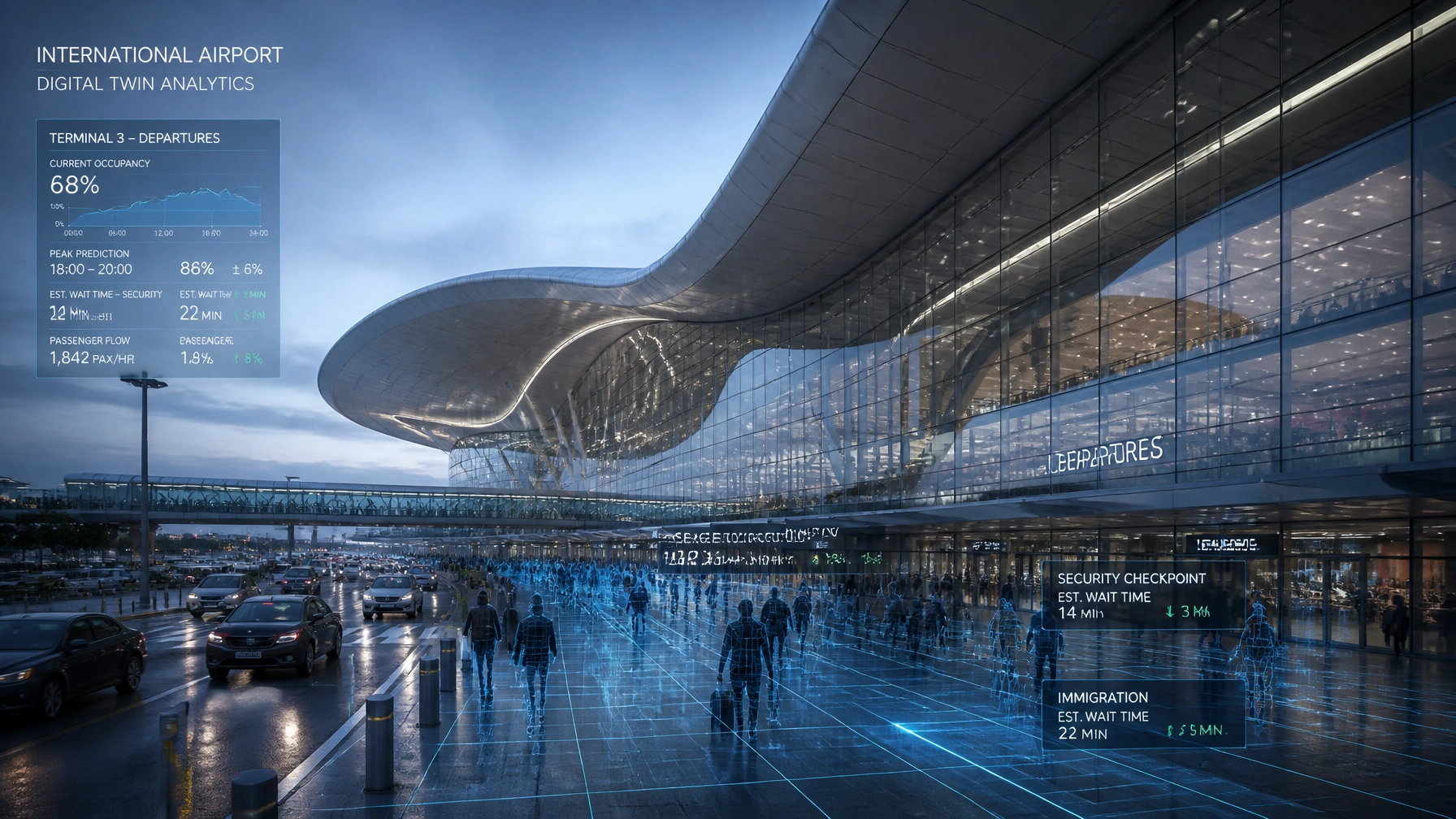
Tokyo Haneda International Airport (HND) stands proudly as the third busiest aviation hub in the world, renowned for its impeccable efficiency, immaculate cleanliness, and lightning-fast access to central Tokyo. Whether you are arriving for a high-stakes business trip or connecting to an international flight, mastering Haneda’s layout is essential for a seamless travel experience.
Beyond its physical architecture, Haneda represents a paradigm shift in aviation infrastructure. As modern megacities demand higher resilience and smarter resource management, aviation hubs are turning to advanced spatial computing. By integrating systems like the MetaWorldX digital twin, airports are transforming from traditional transit zones into intelligent, breathing ecosystems.
1. Navigating Haneda's Three Terminals
Understanding Haneda’s layout prevents unnecessary wandering. The airport comprises three main passenger terminals, each serving distinct flight categories.
- Terminal 1 (Domestic): Primarily operated by Japan Airlines (JAL) and Skymark Airlines, featuring extensive shopping and dining options on upper floors.
- Terminal 2 (Domestic & International): Home to All Nippon Airways (ANA), featuring sleek modern facilities and seamless domestic-to-international transfer connections.
- Terminal 3 (International): The main gateway for international travelers, operating 24 hours a day with multi-level arrivals, departures, and cultural shopping zones.
The era of virtual cities is here. Behind the scenes, optimizing passenger flows across these massive terminals requires more than human oversight. Utilizing AI for airport operations allows management teams to simulate peak hour congestion, dynamically allocate gates, and streamline security queue wait times before bottlenecks occur.

2. Transit Access: Mastering the Tokyo Monorail and Keikyu Line
Getting from Haneda Airport to central Tokyo is remarkably fast and straightforward. Two primary rail networks connect the airport directly to the city core:
- The Tokyo Monorail: Connects Terminals 3, 1, and 2 directly to Monorail Hamamatsucho Station in central Tokyo in just 13 to 24 minutes. From Hamamatsucho, travelers can instantly transfer to the JR Yamanote Line toward Tokyo Station, Shinjuku, or Shibuya.
- The Keikyu Airport Line: Provides direct service toward Shinagawa and Yokohama, intersecting with the Toei Asakusa Subway Line for easy access across eastern Tokyo.
Quick Transit Checklist for Travelers:
- IC Cards: Tap through station gates seamlessly using Suica, PASMO, or ICOCA cards without purchasing paper tickets.
- Transit Boarding Tickets: Connecting passengers transferring between domestic and international flights can obtain free transit tickets at airport information counters to ride between terminals via monorail or Keikyu line.
- JR East Travel Service Center: Located adjacent to the Terminal 3 monorail gate on the 2nd floor, perfect for securing rail passes and shinkansen tickets upon arrival.

3. The Invisible Engine: How Digital Twin Technology Transforms Aviation
While passengers experience smooth monorail rides and efficient check-in counters, a complex digital nervous system operates invisibly beneath the surface. Digital twin technology airports rely on is redefining how massive critical infrastructure is managed.
At MetaWorldX, we pioneer immersive spatial solutions that bridge the physical and virtual worlds. By creating high-fidelity real-time 3D models integrated with IoT sensors, predictive analytics, and AI algorithms, airport operators gain unprecedented visibility into every square meter of their facility.
Core Pillars of Smart Airport Optimization:
- Passenger Flow Intelligence: Machine learning models forecast foot traffic surges, automatically adjusting staffing levels and security lane openings.
- Predictive Maintenance: Continuous monitoring of escalators, baggage handling belts, and HVAC systems detects anomalies before mechanical failures occur.
- Enhanced Environmental Efficiency: Real-time thermal and energy simulations optimize HVAC performance across vast terminals, drastically reducing carbon footprints.
- Next-Gen Security: Integrating access control systems with AI airport security protocols allows command centers to detect and neutralize anomalies instantly.
Explore our comprehensive enterprise approach on our MetaWorldX Capabilities page.
4. Elevating Security and Public Safety Through Advanced Analytics
Airport safety requires absolute precision. Modern command centers cannot rely solely on reactive measures; they demand predictive foresight.
Through the MetaWorldX digital twin, security personnel monitor multi-terminal environments in real time. By synthesizing feeds from thousands of IoT devices, CCTV networks, and automated perimeter sensors, the system creates a unified operational picture. If an unexpected crowd surge or restricted zone breach occurs, intelligent algorithms instantly recommend optimal response vectors for security teams.
Furthermore, integrating smart infrastructure solutions ensures that critical facilities: ranging from aviation hubs to smart cities: maintain uninterrupted operations during emergencies. Discover more about our visionary infrastructure frameworks on our MetaWorldX Services page.

5. The Future of Global Aviation Hubs
As passenger volumes continue to surge globally, airports must evolve into self-optimizing, intelligent ecosystems. Tokyo Haneda sets a high benchmark for operational excellence, proving that seamless traveler experiences stem from rigorous design and advanced technological integration.
By harnessing the power of a MetaWorldX smart airport framework, aviation operators around the world can unlock unprecedented levels of sustainability, safety, and efficiency. The future of travel is interconnected, predictive, and intelligent.
Are you ready to transform your urban infrastructure and aviation facilities for the next era of digital innovation? Contact our team today to discover how our industry-leading solutions can redefine your operational landscape.