
This is post #2 in “50 Ways MetaWorldX Physical AI Is Transforming the World.”
Airports are among the world’s most complex operating environments. Every minute, they coordinate aircraft movements, passenger flows, baggage systems, security operations, ground crews, retail services, transportation networks, and critical building infrastructure.
A delay in one area can quickly create consequences across the entire airport.
A gate change affects passenger movement. A baggage-system interruption affects aircraft turnaround. A security incident can disrupt terminal access. Extreme weather can impact runways, roads, staffing, and energy demand at the same time.
Traditional dashboards often show what is happening. They do not always explain what will happen next: or which action will produce the best outcome.
MetaWorldX Physical AI changes airport management from reactive coordination to predictive, prescriptive operations.
The airport operations challenge: complexity at every level
Airport operators already collect vast amounts of data from sensors, cameras, building management systems, access-control platforms, flight information systems, baggage handling equipment, and airside assets.
The challenge is that this information often remains fragmented.
Operations teams may need to work across:
- Air traffic and flight information systems
- Passenger and queue monitoring tools
- Baggage handling and conveyor systems
- Security and access-control platforms
- Physical Security Information Management (PSIM) systems
- Building management systems (BMS)
- HVAC, lighting, and energy infrastructure
- Ground support equipment and vehicle tracking
- Weather, traffic, and environmental data
When these systems operate in isolation, teams lack a unified operational picture. They may identify a growing queue only after it becomes disruptive, or learn about an equipment failure only after it affects passengers and aircraft.
The result can include:
- Longer passenger wait times
- Missed connections and boarding delays
- Inefficient gate, stand, and staff allocation
- Higher energy consumption
- Unplanned equipment downtime
- Slower responses to incidents
- Increased pressure on airport command centers
The core problem is not a lack of data. It is a lack of shared, real-time context.
How MetaWorldX Physical AI creates an operational twin
MetaWorldX Physical AI is designed to connect the physical airport to a living digital model. The result is an AI digital twin: a continuously updated virtual representation of airport buildings, systems, assets, and operational conditions.
Unlike a static 3D model, the twin reflects real-world activity. It can show where an incident is occurring, identify which systems may be affected, predict how conditions could evolve, and compare possible responses.
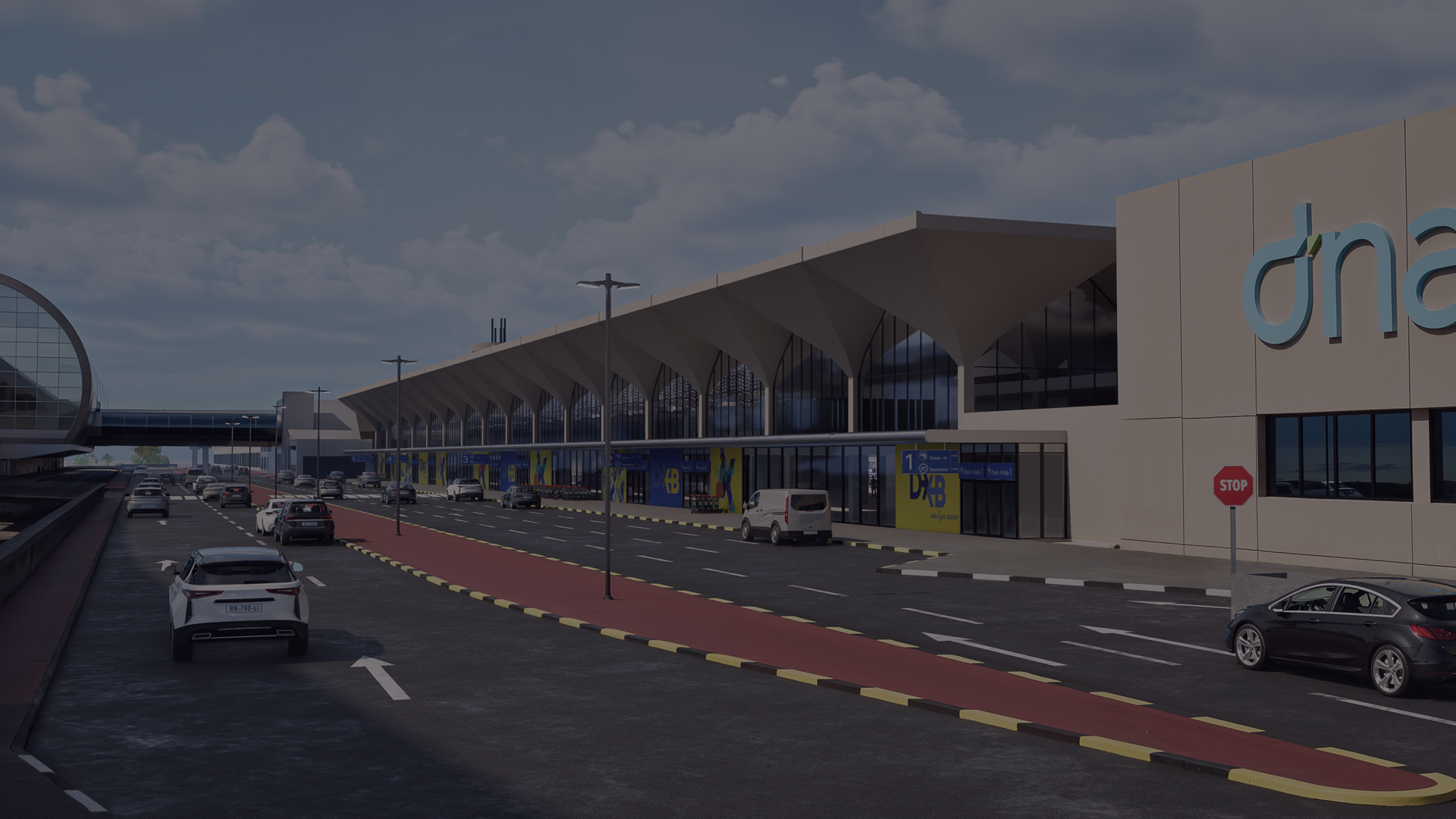
The MetaWorldX Dubai Airport project illustrates this model. It integrates air traffic, security, baggage handling, and IoT data into a real-time operational environment that supports situational awareness, predictive maintenance, simulation, and scenario planning.
The platform’s capabilities can be organized into four connected layers:
1. IoT integration and real-time monitoring
MetaWorldX can connect with existing IoT devices, sensor networks, and operational systems. Airports do not need to replace every existing technology investment to create a more intelligent operating environment.
Relevant data may include:
- Passenger density and movement
- Queue length and processing rates
- Baggage conveyor performance
- Escalator, elevator, and boarding-bridge status
- HVAC temperature, occupancy, and energy data
- Gate, stand, and aircraft turnaround information
- Security alarms and access events
- Ground vehicle and equipment locations
- Weather and air-quality conditions
This information is visualized in a shared 3D environment. Operators can move from an airport-wide view to a specific terminal zone, gate, conveyor, mechanical system, or security area.
Real-time monitoring gives airport leaders a common operating picture instead of disconnected alerts.

2. Predictive analytics
Predictive analytics identifies patterns that indicate a developing issue before it becomes an operational disruption.
For example, MetaWorldX Physical AI can help identify:
- A baggage conveyor showing abnormal vibration or throughput
- A security checkpoint likely to experience a queue surge
- An HVAC system consuming more energy than expected
- A boarding bridge at increased risk of failure
- A terminal zone approaching unsafe or uncomfortable occupancy levels
- A turnaround schedule vulnerable to weather or resource constraints
The system compares live conditions with historical behavior, operating schedules, and relevant environmental data. It can then flag emerging risks, estimate likely impacts, and provide early warnings to the responsible team.
This enables airport operators to move from “respond when something breaks” to “intervene while there is still time to act.”
3. Prescriptive analytics
Prediction is valuable, but airport operations require decisions.
Prescriptive analytics evaluates available options and recommends the next best action based on safety, service continuity, staffing, asset availability, energy consumption, and operational priorities.
Recommendations might include:
- Reassigning staff to a security lane before a passenger surge
- Redirecting passengers toward a less congested checkpoint
- Adjusting gate or stand allocation to protect aircraft turnaround
- Rerouting baggage temporarily around a vulnerable conveyor
- Scheduling maintenance during a lower-impact operating window
- Adjusting HVAC and lighting based on occupancy and flight activity
- Activating an incident-response playbook when conditions cross a defined threshold
The recommendation remains subject to airport policies and authorized decision-makers. This is essential in aviation, where operational accountability cannot be delegated blindly to an algorithm.
Predictive analytics identifies what may happen. Prescriptive analytics helps determine what should happen next.
4. 3D simulation and scenario planning
Airport decisions rarely affect only one department. Closing a terminal zone, taking a conveyor offline, or changing a gate assignment can influence passengers, security teams, ground handlers, airlines, vehicles, and facilities management.
MetaWorldX provides real-time 3D simulation to test those consequences before implementing a change in the physical airport.
Operations teams can model scenarios such as:
- A temporary terminal closure
- A runway or taxiway restriction
- A baggage-system outage
- A major security incident
- Severe weather affecting airside access
- A sudden passenger surge
- A construction phase within an active terminal
- A power, HVAC, or communications failure
The airport can compare response strategies, identify dependencies, and refine emergency procedures without disrupting live operations.
This same principle supports expansion planning. Before adding a checkpoint, gate, people-mover route, or terminal extension, airport authorities can simulate passenger flows, energy demand, emergency access, and operational impacts.
A digital twin turns scenario planning into a practical operating discipline: not a periodic exercise based on static drawings.
Concrete example: protecting a peak-period departure schedule
Consider a major international airport managing a busy morning departure wave.
The platform detects three developing conditions:
- Passenger arrivals are increasing faster than forecast.
- One security lane is processing passengers below its normal rate.
- A baggage conveyor serving several departing flights is showing abnormal motor behavior.
MetaWorldX Physical AI correlates these signals within the airport’s 3D operational model. Predictive analytics estimates that queues could exceed the airport’s service threshold within 25 minutes and that the conveyor has an elevated risk of failure during the same period.
Prescriptive analytics evaluates several responses:
- Open an additional security lane
- Redirect passengers to another checkpoint
- Reassign staff from a lower-demand zone
- Transfer selected baggage flows to an alternate route
- Dispatch a maintenance team before the conveyor fails
- Adjust passenger messaging and gate coordination
The 3D simulation shows the likely effect of each option on queues, staff movement, baggage throughput, and departure readiness. An operations leader approves the preferred plan, while the platform continues monitoring conditions in real time.
The outcome is not simply a faster reaction. It is earlier intervention, coordinated execution, and reduced disruption across multiple airport functions.

Measuring the ROI: energy, response time, and downtime
Airport digital twin programs should be measured against operational and financial outcomes: not only technology deployment milestones.
Key performance indicators can include:
- Energy consumption per passenger or square metre
- HVAC and lighting efficiency
- Mean time to detect incidents
- Mean time to respond
- Baggage-system availability
- Unplanned equipment downtime
- Aircraft turnaround time
- Queue duration and passenger-processing rates
- On-time departure performance
- Maintenance costs and emergency callouts
Energy savings
HVAC is one of the largest energy consumers in airport terminals. By combining occupancy data, flight schedules, weather inputs, and building-system telemetry, MetaWorldX can support more precise climate-control decisions.
For example, the system may identify underused zones that can operate at reduced ventilation or temperature settings while maintaining safety and comfort requirements. It can also detect equipment operating inefficiently or outside expected patterns.
The exact savings depend on the airport’s baseline, building design, controls, and operating practices. However, even modest reductions in terminal energy use can create meaningful savings at large facilities while supporting emissions-reduction objectives.
Faster response times
When security, facilities, baggage, and operations data appear in one 3D environment, teams spend less time locating the problem and gathering context.
A Toronto Digital Twin project by MetaWorldX demonstrates the value of integrating traffic, environmental, infrastructure, and public-safety data to support coordinated emergency response. The same operating principle applies to airports: the faster decision-makers understand the location, severity, and dependencies of an event, the faster they can act.
Reduced downtime
Predictive maintenance helps teams intervene before equipment failure causes a terminal, baggage, or airside disruption.
Instead of relying solely on fixed maintenance intervals, airport operators can prioritize assets based on condition, risk, operational criticality, and the consequences of failure. This can reduce emergency repairs, protect service continuity, and improve the useful life of equipment.
The ROI of airport digital twin technology comes from many small improvements working together: fewer interruptions, better resource use, faster response, and more reliable assets.
Integration with existing airport systems
A Physical AI platform must work with the systems airport teams already trust.
MetaWorldX supports integration with:
- PSIM and security operations platforms
- Access-control systems
- BMS and facility-management systems
- IoT and sensor networks
- GIS and BIM environments
- Maintenance and work-order systems
- Emergency-management tools
- Operational dashboards and command centers
This allows a predicted failure, access event, or passenger-flow anomaly to be viewed alongside nearby cameras, authorized personnel, asset information, maintenance history, and response procedures.
The goal is not to create another isolated dashboard. It is to create a unified command environment where airport authorities, operators, security teams, facilities managers, and emergency responders can work from the same operational truth.

Human-in-the-loop governance for safer decisions
Airport operations require a careful balance between automation and accountability.
MetaWorldX Physical AI can surface patterns, forecast risks, simulate outcomes, and recommend interventions. Authorized personnel remain responsible for approving actions according to airport procedures, aviation regulations, security policies, and local knowledge.
This human-in-the-loop model provides:
- Explainable recommendations
- Defined approval workflows
- Role-based access and control
- Scenario review before high-impact decisions
- Auditability of operational actions
- Clear accountability during emergencies
AI strengthens the expertise of airport professionals. It does not replace the judgment required to manage safety-critical environments.
The future of airport management is predictive
Airports in Dubai, Toronto, and other global hubs are becoming more connected, data-rich, and operationally complex. The next competitive advantage will not come from collecting more data alone. It will come from understanding that data in context and acting before disruptions escalate.
MetaWorldX Physical AI brings together digital twin technology, IoT integration, predictive and prescriptive analytics, real-time monitoring, 3D simulation, and human governance to help airports operate with greater clarity and resilience.
The airport of the future is not only a physical destination. It is a continuously learning operational ecosystem.
Explore the MetaWorldX Physical AI platform to learn how AI digital twins can support safer, more efficient, and more sustainable airport operations.