
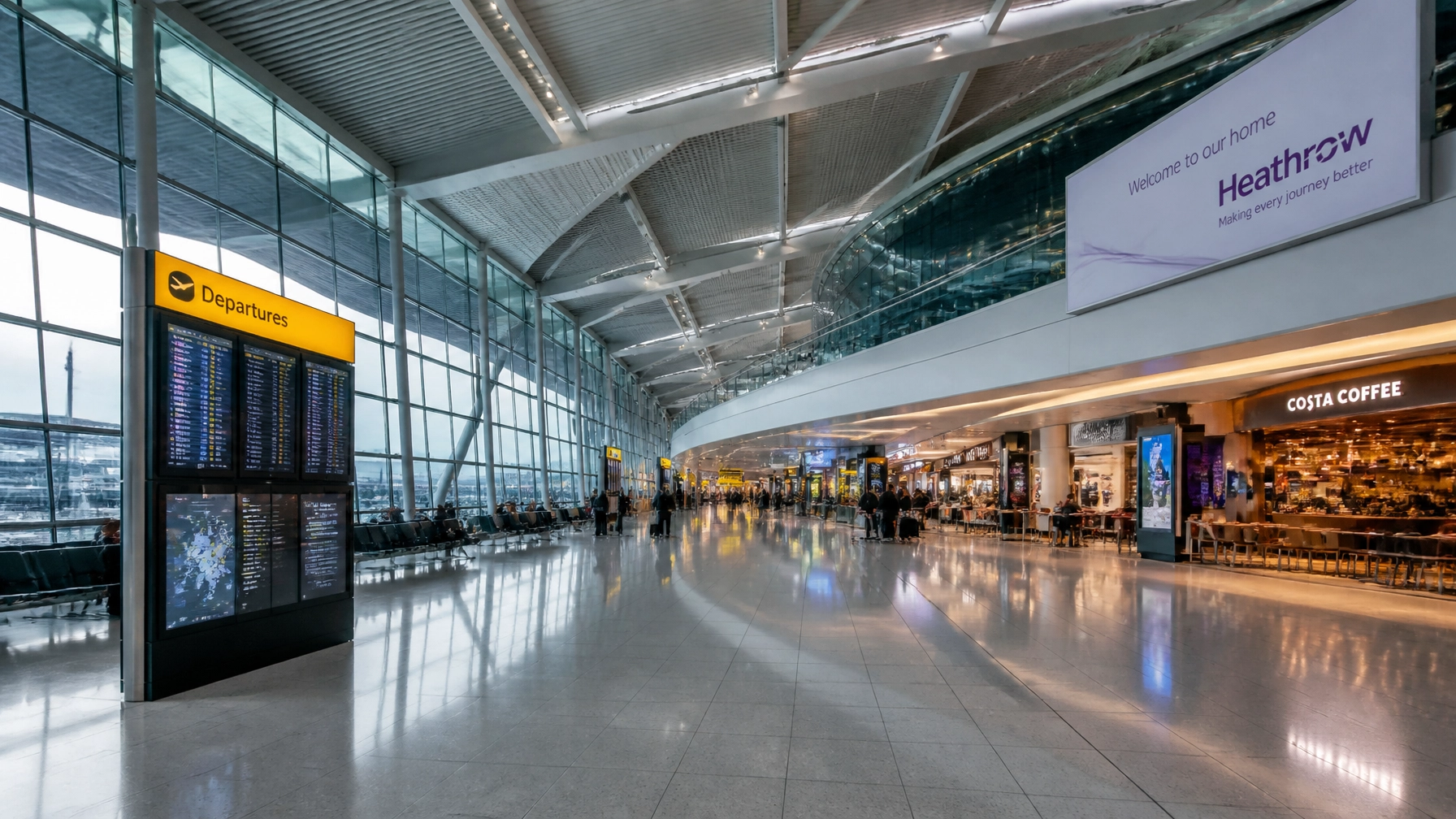
As the UK’s primary aviation gateway and one of the busiest international transit hubs in the world, London Heathrow Airport (LHR) handles tens of millions of passengers annually across its sprawling multi-terminal layout. Navigating such a vast infrastructure requires precision, preparation, and an understanding of modern transport logistics. Yet, behind the sprawling concourses and bustling check-in halls lies an invisible layer of next-generation intelligence.
The era of virtual cities is here, and it extends deep into the heart of global aviation. By integrating advanced MetaWorldX digital twin ecosystems, modern mega-airports are redefining how passenger flow, baggage logistics, and critical security are managed in real time. Whether you are catching an express train to central London or transiting between international flights, understanding both the physical terminals and the AI digital twin airports framework transforms your journey from stressful to seamless.
1. Decoding London Heathrow’s Terminals: A Comprehensive Layout Guide
Heathrow operates four active passenger terminals: Terminals 2, 3, 4, and 5: while Terminal 1 remains closed. Each terminal serves specific alliance carriers, long-haul operators, and low-cost carriers, making pre-travel verification essential.

Terminal Breakdown and Key Zones
- Terminal 2 (The Queen's Terminal): Home to Star Alliance carriers. Located on the northern campus alongside T3, it features state-of-the-art check-in zones, automated bag drops, and easy access to the central underground concourse.
- Terminal 3: Serves a mix of Oneworld and SkyTeam carriers, along with Virgin Atlantic. It is situated adjacent to Terminal 2, linked by a short, direct underground pedestrian walkway.
- Terminal 4: Positioned on the southern side of the airfield. Primarily handles SkyTeam carriers and various international long-haul routes. It operates independently from the northern terminals, requiring specific shuttle or rail connections.
- Terminal 5: Operated exclusively by British Airways and Iberia. Located on the western perimeter of the airport, T5 is a massive multi-concourse facility featuring its own dedicated rail station and transit systems.
Mastering your terminal choice before arriving at LHR eliminates unnecessary delays and ensures a frictionless start to your trip.
2. Express Rail Tips & Seamless Inter-Terminal Transit
Moving between terminals or heading into central London demands an understanding of Heathrow’s robust rail and bus network. Because terminals are not fully connected airside as a single network, inter-terminal transfers require careful time management.
Essential Rail and Transit Strategies
- Heathrow Express: The fastest non-stop rail link to London Paddington, taking approximately 15 minutes. Trains depart from Heathrow Central (serving Terminals 2, 3, and 4 via transfer) and Terminal 5. Notably, Heathrow Express provides free inter-terminal travel between Heathrow Central and Terminal 5.
- Elizabeth Line and Piccadilly Line: Excellent cost-effective alternatives connecting Heathrow directly to central London and local transit networks. Both lines are accessible from the Heathrow Central station (T2 & T3).
- Inter-Terminal Walking & Shuttles: Walking between Terminal 2 and Terminal 3 takes just 5 to 10 minutes via a covered underground walkway. Transfers involving Terminal 4 or Terminal 5 require free rail or dedicated shuttle buses, with total transfer times ranging from 20 to 35 minutes.
Strategic planning of your rail connection ensures you never miss a tight flight connection or a crucial meeting in the capital.
3. The Power Behind the Hub: How AI Digital Twin Technology Transforms LHR
While travelers experience physical escalators, express trains, and boarding gates, aviation operators deal with a staggering amount of complexity behind the scenes. Managing millions of bags, coordinating hundreds of aircraft movements, and securing vast terminal spaces requires unprecedented data synthesis. This is where digital twin technology airports play a pivotal role.

Transforming Aviation with the MetaWorldX Digital Twin
Modern smart infrastructure relies on dynamic, real-time 3D simulations that mirror every physical asset of the airport environment. Through our expertise at MetaWorldX, we empower critical infrastructure operators to turn complex information into actionable insights.
- Real-Time Operational Visibility: By integrating Internet of Things (IoT) sensors across runways, gates, and baggage tunnels, operators maintain an uncompromised, holistic view of the entire airport ecosystem.
- Predictive Scenario Planning: Comprehensive 3D simulations allow teams to test emergency evacuation scenarios, weather disruptions, and peak holiday passenger surges before they occur in reality.
- Optimized Resource Allocation: Leveraging a MetaWorldX smart airport framework enables automated scheduling of ground crews, security staff, and gate assignments based on live predictive analytics.
The integration of intelligent virtual models ensures that major aviation hubs operate with maximum efficiency, minimizing delays and elevating the overall passenger experience.
4. Elevating Security, Passenger Flow, and Predictive Maintenance
Airport security and asset reliability form the bedrock of global aviation trust. Traditional surveillance and reactive maintenance schedules are no longer sufficient for high-volume hubs like London Heathrow.

Core Pillars of Next-Generation Airport Management
- Advanced AI Airport Security: Machine learning algorithms monitor CCTV feeds and access control points to detect anomalies, unauthorized access, and crowd bottlenecks instantaneously, empowering security teams to make faster, proactive decisions.
- Streamlined Passenger Flow Analytics: By tracking queue densities in real time, airport managers dynamically open additional security lanes and direct passenger traffic to less congested checkpoints.
- Predictive Maintenance for Critical Assets: Moving beyond fixed-schedule maintenance, AI-driven sensors predict mechanical wear in baggage sorting belts, jet bridges, and escalators, preventing costly breakdowns during peak hours.
To explore how these capabilities extend beyond aviation, visit our dedicated solutions in Critical Infrastructure and Smart Cities. Discover more about our cutting-edge capabilities on our Services Page and catch up on industry insights via our Blog.
Proactive asset management and intelligent security protocols guarantee safer, more resilient environments for millions of international travelers every single day.
Conclusion: Embracing the Future of Smart Aviation
Navigating London Heathrow like a pro means combining practical travel savvy: such as knowing your terminal, utilizing the Heathrow Express, and budgeting adequate transit time: with an appreciation for the technological marvels operating behind the scenes. As the aviation industry evolves, the synergy between elite physical infrastructure and advanced AI for airport operations will continue to redefine what is possible in global transit.
At MetaWorldX, we are proud to pioneer the digital twin solutions shaping tomorrow's connected world. We invite decision-makers, urban planners, and aviation leaders to explore how our award-winning technology can transform your operations. Step into the future of intelligent infrastructure and discover a smarter way to connect the world.