
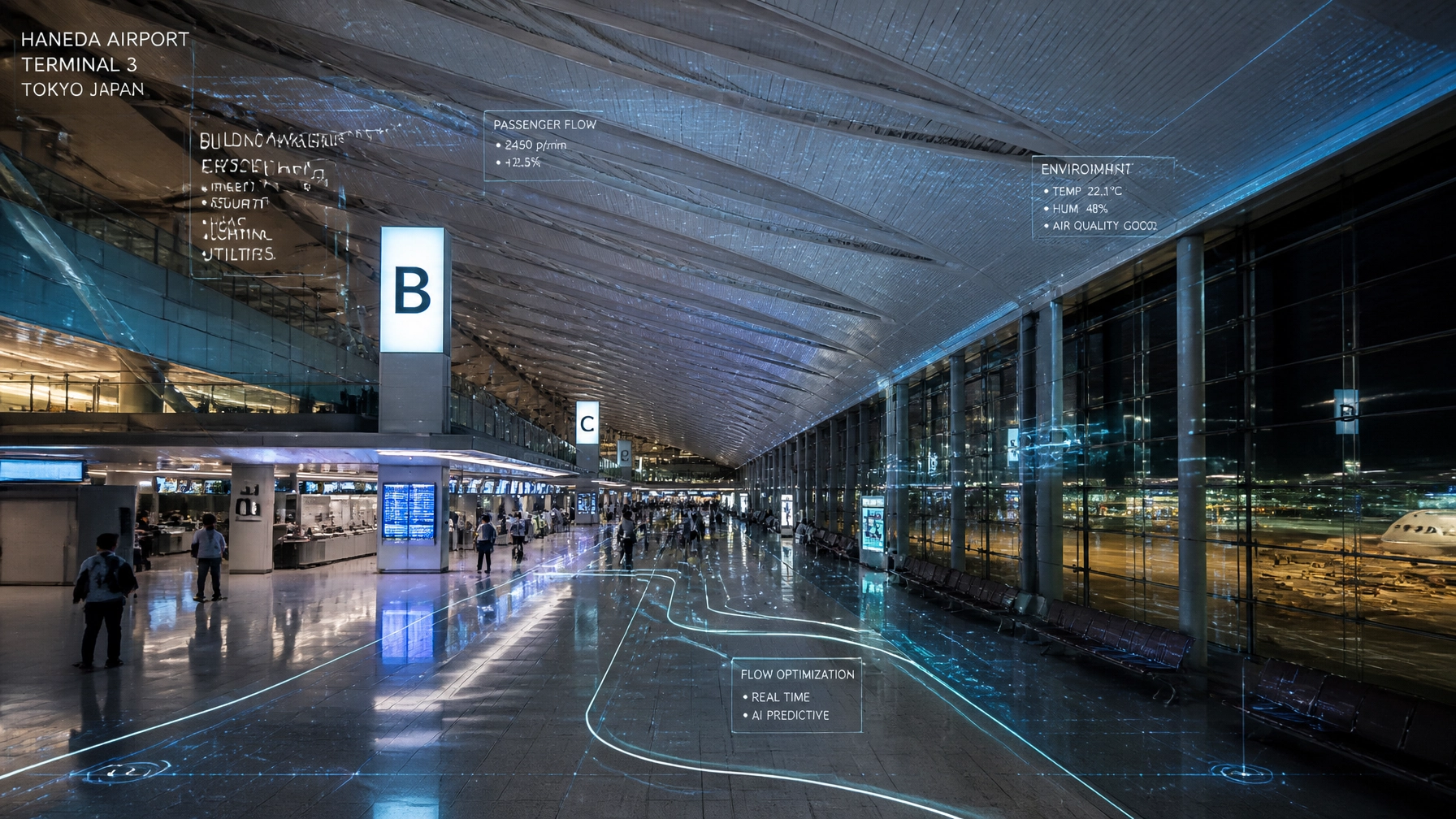
Tokyo Haneda Airport (HND) is more than just a transit point; it is a marvel of precision, hospitality, and cutting-edge engineering. Ranked as the third busiest airport in the world, Haneda serves as the primary gateway to the Tokyo metropolitan area. For the modern traveler, navigating its expansive terminals requires a blend of traditional "Omotenashi" hospitality and an understanding of the sophisticated technology operating behind the scenes.
In this installment of our airport navigation series, we explore how to master Haneda’s terminals and transport links, while diving into the AI digital twin technology that ensures this massive hub operates with clockwork efficiency.
The Three Pillars of Haneda: A Terminal Overview
Haneda is divided into three distinct terminals, each catering to specific airlines and passenger needs. Understanding your departure or arrival point is the first step to a stress-free journey.
- Terminal 1 (T1): The heart of domestic travel for the Japan Airlines (JAL) group. It features a sprawling layout with North and South wings, housing extensive shopping and dining options.
- Terminal 2 (T2): Primarily serves All Nippon Airways (ANA) domestic flights, though it has recently expanded to include a dedicated international section. Be sure to check your ticket carefully, as domestic and international departure lobbies are on different floors.
- Terminal 3 (T3): The primary hub for international travelers. T3 is famous for its 24-hour accessibility and the stunning Edo Ko-ji shopping street, which recreates the atmosphere of old Tokyo.
Connecting these terminals is a free, high-frequency shuttle bus (Bus Stop 0 at T3), though travelers with a valid boarding pass can also use the Tokyo Monorail or Keikyu Line for free inter-terminal transfers by obtaining a transit ticket at the information desk.
Seamless Connectivity: Mastering Airport Transport
Efficiency is the hallmark of Japanese infrastructure, and the connection between Haneda and central Tokyo is no exception.
The Tokyo Monorail
For those staying near Hamamatsuchō or transferring to the JR Yamanote Line, the Tokyo Monorail offers a scenic, 13–20 minute journey. It is particularly convenient for those using the Welcome Suica or digital IC cards.
The Keikyu Line
The Keikyu Airport Line is the preferred choice for travelers heading to Shinagawa, Yokohama, or directly into the Toei Asakusa subway line. It provides rapid access to the southern and eastern parts of the city.
Pro Tip: Download the HANEDA Navigator app before landing. It provides real-time gate updates, walking paths, and terminal wait times, acting as your personal digital concierge.

The Silent Hub: Practical Travel Advice
Unlike many Western airports, Haneda adheres to a "Silent Airport" concept. To maintain a calm atmosphere, boarding calls are minimized or eliminated entirely. Passengers are expected to monitor flight boards and mobile notifications proactively.
- Culinary Excellence: Some of Tokyo’s best ramen and sushi can be found in the Edo Market (4F) and Tokyo Pop Town (5F) before security.
- Observation Decks: Every terminal has a free observation deck. Terminal 2’s deck is particularly famous for its panoramic views of Tokyo Bay.
- Baggage Innovation: Keep an eye out for Japan Airlines’ humanoid robots currently in trial phases. These AI-driven assistants are designed to help with baggage handling and mobility assistance, showcasing the future of automated passenger service.
The Invisible Architecture: AI Digital Twins at Haneda
While passengers experience the physical beauty of Haneda, an invisible layer of intelligence: the AI digital twin: is what truly powers the hub. A digital twin is a virtual replica of the airport’s physical assets, systems, and processes, updated in real-time by IoT sensors and data feeds.
AI for airport operations at Haneda is moving toward a total ecosystem approach. By integrating digital twin technology in airports, operators can simulate thousands of scenarios before they happen, ensuring that Japan’s busiest hub never skips a beat.
- Passenger Flow Management: Using NEC’s advanced AI analytics, the airport monitors crowd density and movement patterns. This allows for real-time adjustments to security staffing and gate assignments, reducing bottlenecks.
- Baggage Handling & Predictive Maintenance: Digital twins monitor the health of miles of conveyor belts and sorting machines. AI identifies potential mechanical failures before they occur, preventing the dreaded baggage delays common in less tech-forward hubs.
- Environmental Efficiency: Through Smart Building simulations, Haneda optimizes HVAC (heating, ventilation, and air conditioning) based on real-time occupancy data, significantly reducing the airport’s carbon footprint.
- Autonomous Vehicle Management: Haneda is a testing ground for NEC autonomous vehicles. These self-driving shuttles and cargo carriers operate on restricted service roads, managed through a digital twin interface that ensures safe coordination with traditional ground traffic.

MetaWorldX: Orchestrating the Future of Aviation
At MetaWorldX, we are at the forefront of this transformation. Our AI-driven digital twins are not just maps; they are living, breathing data ecosystems that empower decision-makers to build more resilient and sustainable infrastructure.
Our solutions align perfectly with the needs of global hubs like Haneda:
- Critical Infrastructure: We provide predictive insights that ensure the continuous operation of essential airport systems, from power grids to water management.
- Smart Buildings: Our technology transforms terminals into high-efficiency environments that prioritize both passenger comfort and environmental sustainability.
- Public Health & Safety: Through AI-integrated security and emergency response simulations, we help airports maintain the highest standards of safety for millions of annual travelers.
- Smart Cities: As airports become "aerotropolises," our digital twins bridge the gap between terminal operations and the surrounding urban landscape, creating a seamless flow of data and people.
The era of virtual cities and intelligent airports is here. By leveraging a MetaWorldX smart airport framework, infrastructure operators can move from reactive management to proactive, prescriptive strategy.
Conclusion: The Future is Twin-Powered
Navigating Tokyo Haneda like a pro means more than just knowing which train to take; it’s about appreciating the sophisticated MetaWorldX digital twin philosophy that makes such a massive operation feel effortless. As Haneda continues to integrate AI airport security and autonomous systems, it remains the gold standard for what a modern, "smart" airport can achieve.
Whether you are exploring the Edo-period shops or boarding a flight to the other side of the world, remember that beneath the surface, a digital twin is working tirelessly to ensure your journey is safe, efficient, and inspiring.
Ready to transform your infrastructure? Explore the power of MetaWorldX and see how our AI-driven digital twins are redefining the global landscape.