

The data center industry stands at a critical inflection point. With AI workloads exploding, energy costs soaring, and sustainability mandates tightening, traditional infrastructure management approaches are reaching their limits. Enter AI-powered digital twins: a transformative technology that's reshaping how data centers operate, optimize, and evolve.
Recent industry surveys reveal that 86% of data center executives believe that delaying digital twin implementation puts their operations at a competitive disadvantage. This urgency isn't just hype: it's a response to mounting pressures that demand immediate action.
What Are AI Digital Twins for Data Centers?
An AI digital twin creates a comprehensive virtual replica of your entire data center infrastructure, from cooling systems and power distribution to server racks and network equipment. Unlike static monitoring tools, these intelligent systems combine real-time IoT sensor data with artificial intelligence to deliver predictive analytics, scenario simulation, and autonomous optimization.
Think of it as your data center's digital brain: constantly learning, analyzing, and making intelligent recommendations to keep your operations running at peak efficiency.
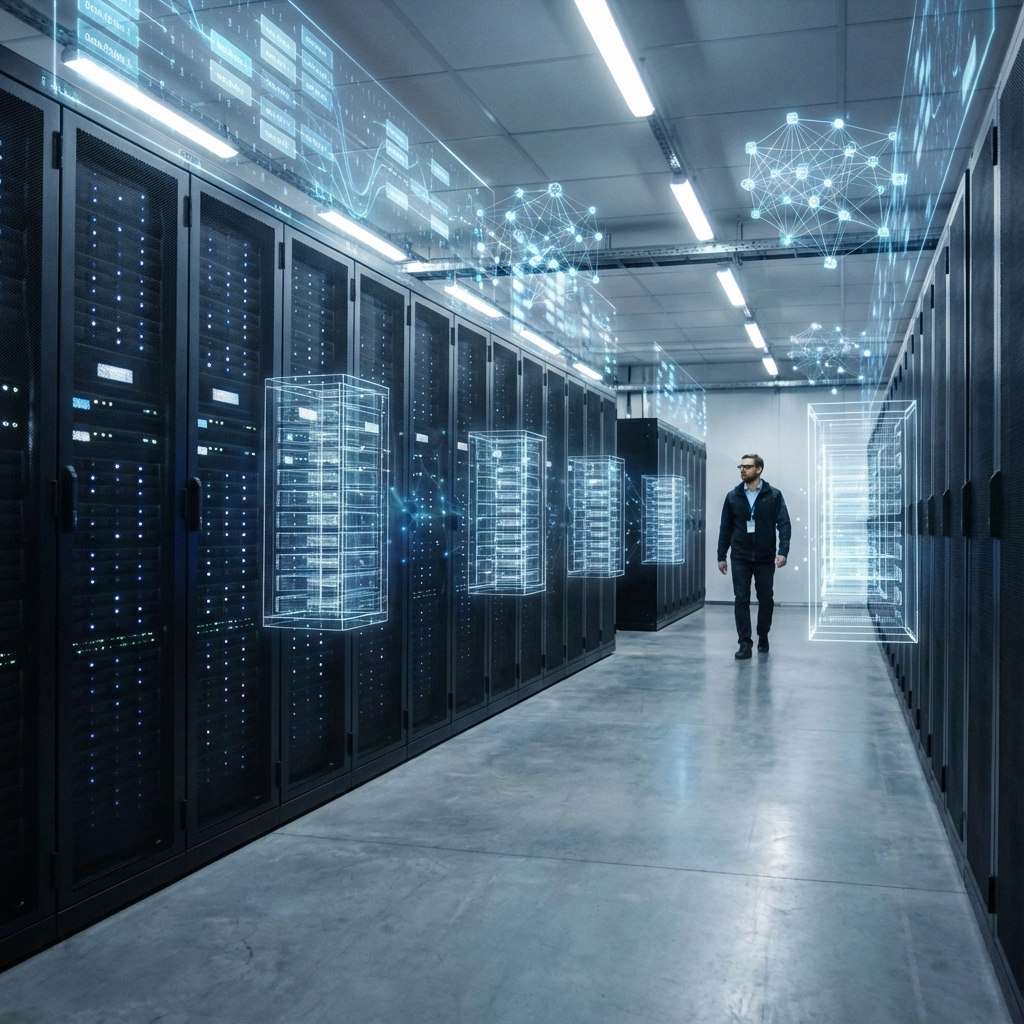
The integration of AI transforms digital twins from passive models into proactive management systems that can predict failures, optimize energy consumption, and simulate complex scenarios before they impact your physical infrastructure.
Why Innovation Can't Wait: The Urgent Business Case
Energy Costs Are Spiraling
Data centers consume approximately 1% of global electricity, with costs continuing to climb. AI digital twins reduce power consumption by 20-30% through intelligent cooling optimization and workload balancing. When energy represents 60-70% of operational expenses, these savings translate directly to bottom-line impact.
AI Workloads Demand Peak Performance
The AI revolution has created unprecedented infrastructure demands. Digital twins enable dynamic resource allocation, improving server utilization by 15-20% and ensuring your infrastructure can handle intensive machine learning workloads without costly over-provisioning.
Sustainability Mandates Are Non-Negotiable
Regulatory pressure and corporate sustainability commitments require measurable carbon reduction. Digital twin technology can reduce building emissions by up to 50%: a critical advantage as organizations face increasing scrutiny over their environmental impact.
Downtime Costs Are Catastrophic
Every minute of unplanned downtime costs enterprises an average of $9,000. AI digital twins enable predictive maintenance that prevents failures before they occur, extending equipment lifespan and eliminating costly emergency repairs.
Core Benefits That Drive ROI
Real-Time Operational Intelligence
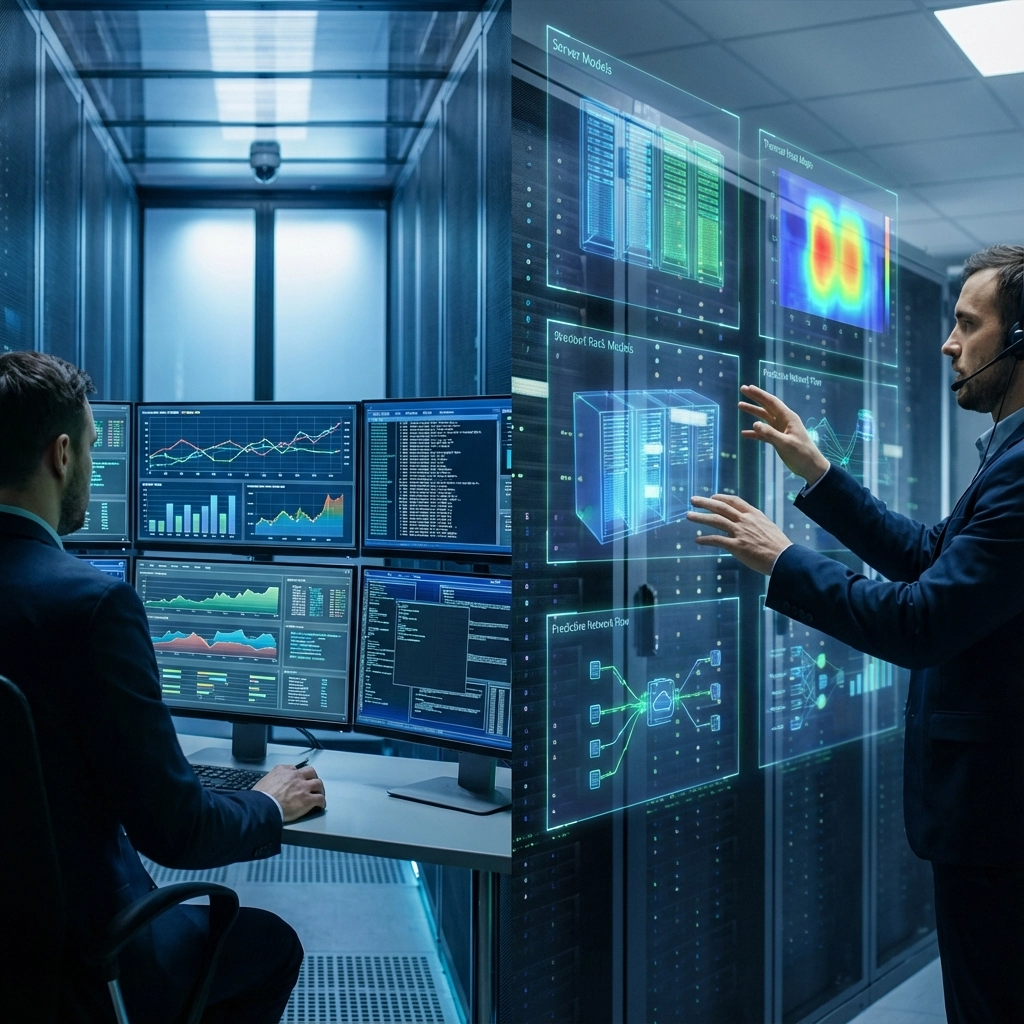
AI digital twins provide unprecedented visibility across your entire infrastructure stack. Continuous monitoring detects anomalies in thermal conditions, power distribution, and security access while automatically logging changes for compliance with GDPR, ISO 27001, and SOC 2 requirements.
This comprehensive awareness enables proactive decision-making based on actual performance data rather than assumptions or outdated maintenance schedules.
Predictive Maintenance Revolution
Machine learning algorithms analyze historical patterns and real-time sensor data to predict equipment failures weeks or months in advance. This shift from reactive to predictive maintenance delivers multiple benefits:
- Extended equipment lifespan through optimized maintenance timing
- Reduced unplanned downtime and associated revenue loss
- Lower maintenance costs through strategic scheduling
- Improved resource allocation for technical teams
Energy Optimization and Cost Reduction
Digital twins excel at identifying energy waste and optimizing consumption patterns. AI algorithms continuously adjust cooling strategies, balance server loads, and recommend infrastructure changes that reduce overall power usage.
Key energy benefits include:
- Automated cooling adjustments based on real-time thermal analysis
- Dynamic workload distribution to minimize energy consumption
- Identification of underutilized equipment for consolidation opportunities
- Optimization of power usage effectiveness (PUE) ratios
Capacity Planning Precision
Traditional capacity planning relies on estimates and safety margins that often lead to over-provisioning. Digital twins enable precise simulation of future workloads and expansion scenarios before committing capital resources.
This precision prevents unnecessary infrastructure investments while ensuring you can meet growing demand efficiently.
Financial Impact Across Time Horizons
Immediate Returns (0-2 Years)
Digital twin implementations deliver quick wins that begin offsetting initial investment costs:
- Automated Efficiency Gains: Load balancing and energy optimization generate immediate operational savings
- Enhanced Client Attraction: Immersive digital tours and self-service capabilities improve marketing effectiveness
- Training Cost Reduction: Simulation-based training eliminates the need for expensive on-site instruction
Mid-Term Value Creation (2-5 Years)
As AI algorithms learn and optimize, the financial benefits compound:
- Predictive Maintenance Savings: Prevention of major equipment failures delivers substantial cost avoidance
- Sustainability Incentives: Government programs and carbon credit opportunities provide additional revenue streams
- Operational Efficiency: Automation reduces staffing requirements while improving service quality
Long-Term Competitive Advantage (5+ Years)
Digital twins create sustainable competitive differentiation:
- Infrastructure Agility: Rapid adaptation to market changes and emerging technologies
- Total Cost Optimization: Reduced ownership costs through optimized utilization and extended equipment life
- Revenue Growth: Higher uptime guarantees and improved service reliability enable premium pricing
- Self-Healing Systems: Advanced AI automation minimizes human intervention requirements
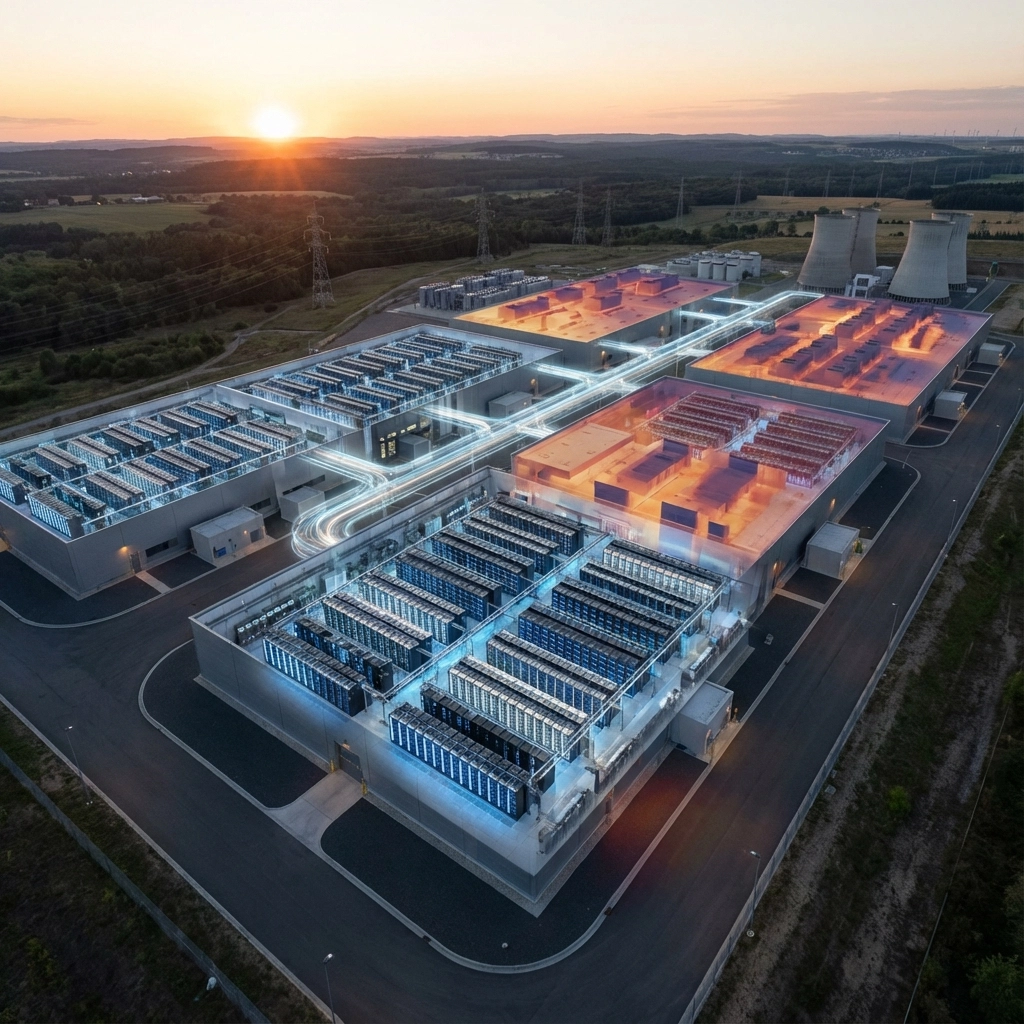
Most organizations recover their digital twin investment within 3-4 years and achieve ongoing annual savings of 10-25% in operational expenses.
Implementation Applications
Infrastructure Design and Planning
During construction or renovation phases, digital twins enable comprehensive scenario testing. Architects and engineers can visualize layouts, simulate airflow patterns, and optimize space utilization before breaking ground.
This capability eliminates costly design errors and ensures new facilities operate efficiently from day one.
Thermal Management Excellence
Digital twins provide granular thermal analysis, modeling airflow distribution and identifying potential hotspots before they impact equipment performance. Advanced systems can simulate power usage at the chip level, enabling precise cooling strategies that maximize efficiency while protecting critical hardware.
Disaster Recovery and Business Continuity
What-if analysis capabilities allow comprehensive testing of disaster recovery scenarios without affecting production operations. Simulate power outages, cooling failures, network disruptions, and cybersecurity incidents to validate response procedures and identify potential vulnerabilities.
Performance Optimization
Continuous analysis of workload patterns enables dynamic optimization of resource allocation. Digital twins automatically suggest configuration changes, identify underutilized capacity, and recommend workload distribution strategies that maximize performance while minimizing costs.
The AI Integration Advantage
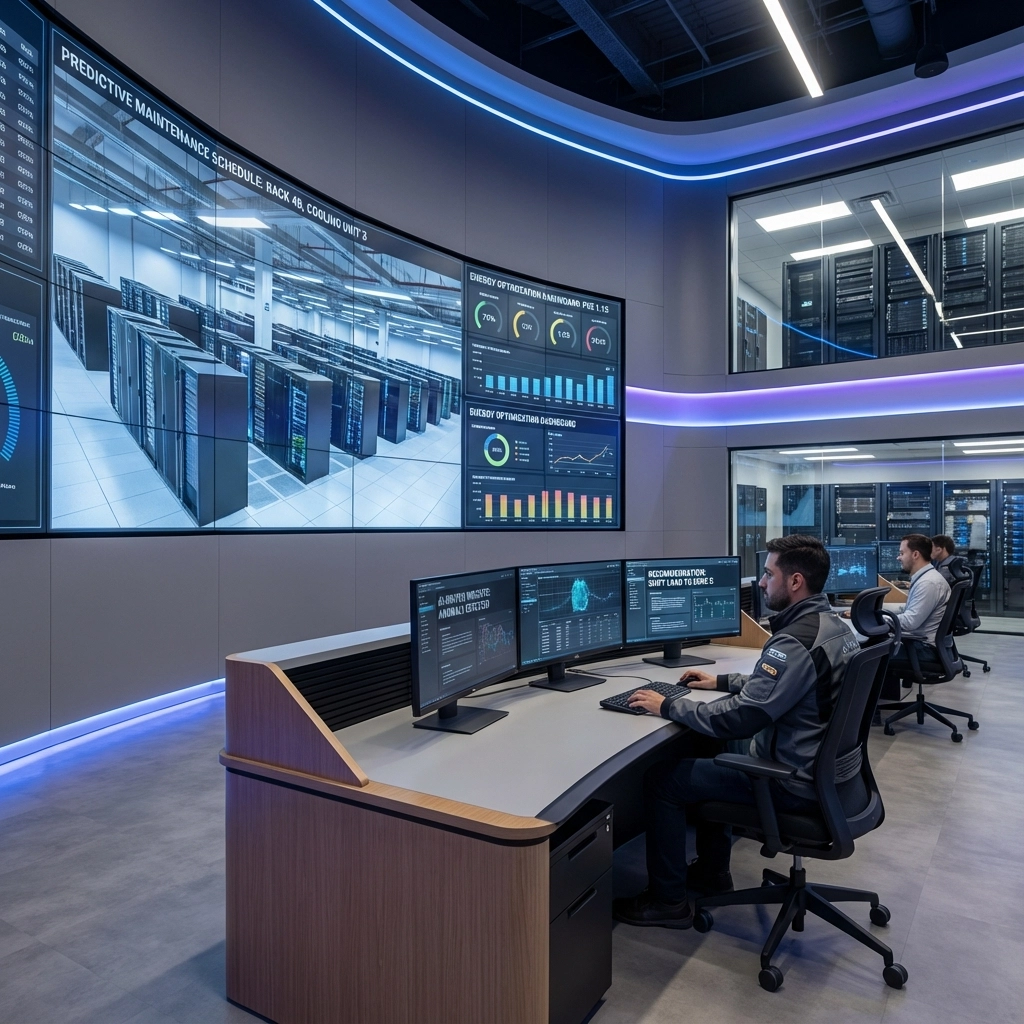
The marriage of digital twins and artificial intelligence creates systems that learn, adapt, and improve autonomously. AI algorithms continuously analyze operational patterns, automatically implement optimization strategies, and evolve their recommendations based on changing conditions.
This partnership accelerates decision-making, improves accuracy, and reduces operational risk while enabling increasingly autonomous facility management that requires minimal human intervention.
Future-Proofing Your Infrastructure
As data centers continue scaling to meet demands from cloud computing, AI workloads, and IoT applications, digital twin capabilities will expand significantly. Future developments include:
- Quantum Computing Integration: Optimization algorithms that leverage quantum processing power
- Blockchain Security: Enhanced data integrity and regulatory reporting through distributed ledger technology
- Advanced Machine Learning: Self-optimizing systems that continuously improve performance without human input
- Ecosystem Integration: Seamless connectivity with smart grid systems and renewable energy sources
Taking Action: The Path Forward
Digital twin technology has evolved from experimental innovation to operational necessity. Data center operators who delay implementation risk falling behind competitors who are already capturing the benefits of AI-powered optimization.
The question isn't whether to implement digital twins: it's how quickly you can begin the transformation. With proven ROI timelines, established technology platforms, and growing competitive pressure, the case for immediate action has never been stronger.
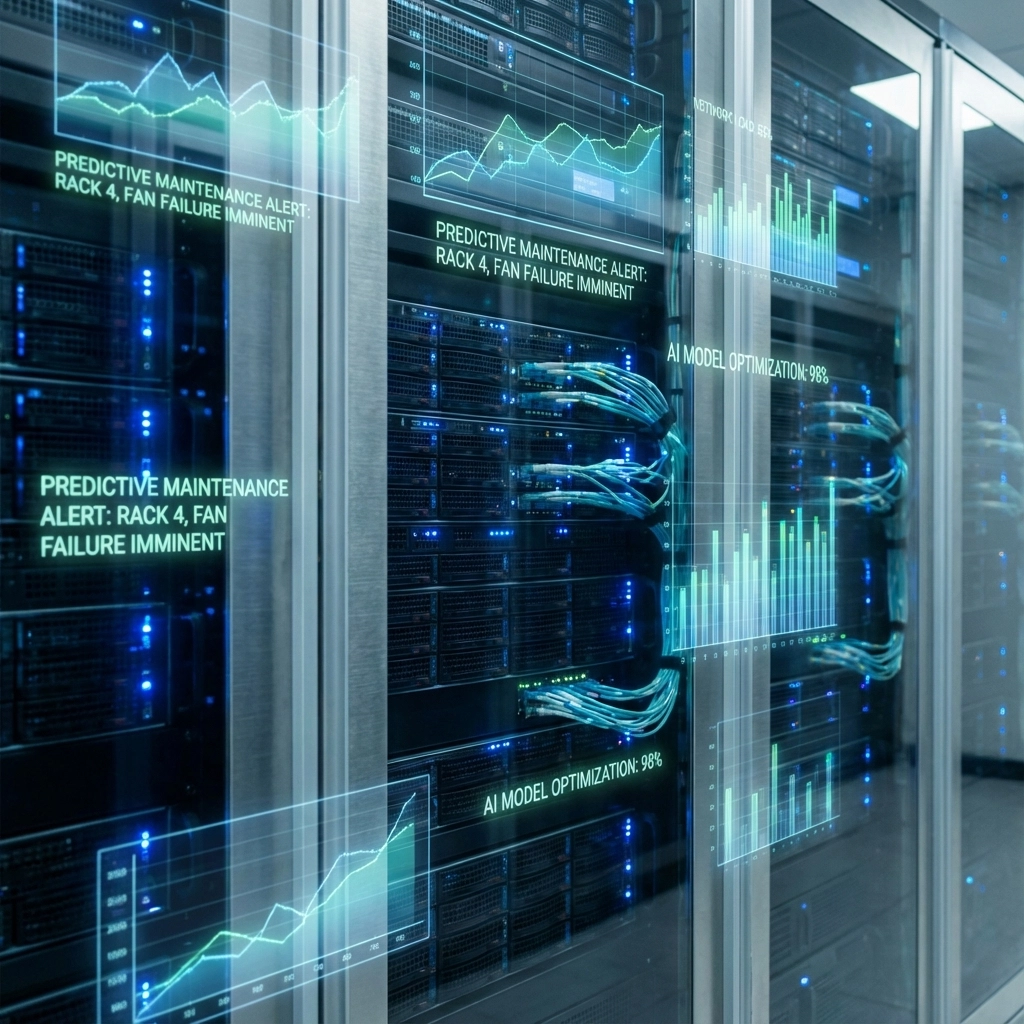
The future of data center operations belongs to organizations that embrace AI digital twins today. By combining real-time intelligence with predictive capabilities, these systems deliver the operational excellence, cost efficiency, and sustainability performance that modern businesses demand.
Ready to transform your data center operations? Explore how MetaWorldX's digital twin solutions can deliver the competitive advantages your organization needs to thrive in the AI-driven economy.