
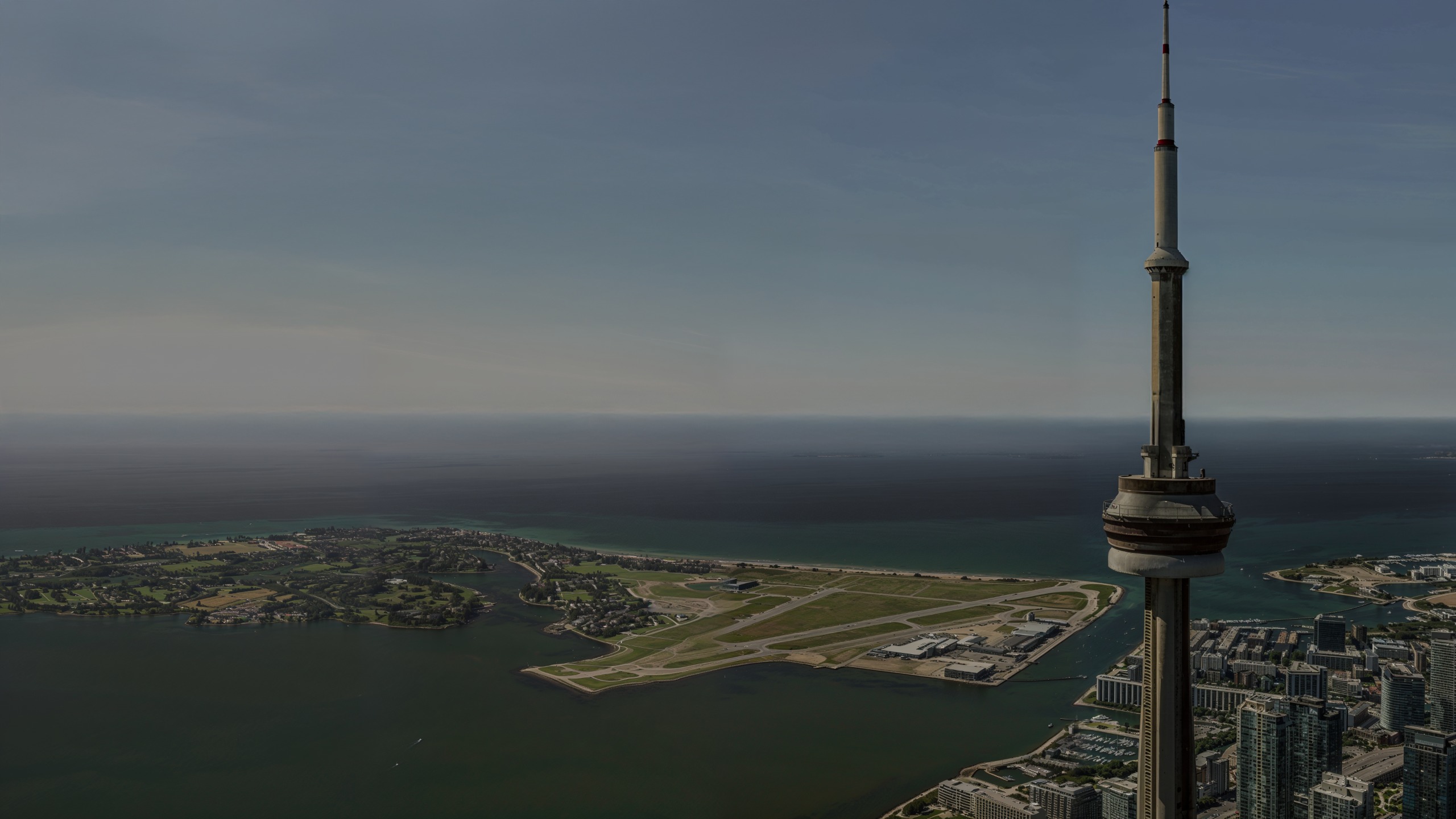
Cities are investing in digital twins to improve planning, public safety, infrastructure operations, and sustainability. But not every digital twin platform delivers the same value.
Some are primarily 3D visualization tools. Others connect live data, simulate future conditions, predict risks, and recommend actions. The difference matters. A city does not need another attractive dashboard; it needs a decision system that helps leaders act earlier and with greater confidence.
The World Economic Forum’s Global Digital Twin Cities Framework and the UNDP’s guidance on digital twins for cities both emphasize the importance of data integration, governance, simulation, and measurable public value.
Before selecting a vendor, city decision-makers should ask five direct questions.
1. Does it actually predict, or does it only visualize?
The era of the static 3D model is over.
A digital twin becomes strategically valuable when it helps a city understand what may happen next, not simply what is happening now. Visualization is useful for orientation, but prediction and simulation support better decisions about infrastructure, mobility, emergencies, climate resilience, and public services.
A serious vendor should demonstrate how its platform can:
- Ingest real-time data from sensors, IoT devices, GIS, BIM, and operational systems
- Detect anomalies and identify emerging risks
- Forecast conditions such as congestion, equipment failure, flooding, or resource demand
- Run 3D “what-if” scenarios before a policy, construction project, or emergency intervention is implemented
- Recommend actions through prescriptive analytics, not just display alerts
There is an important distinction between predictive analytics and prescriptive analytics. Predictive analytics estimates what could happen. Prescriptive analytics helps determine what should happen next, based on objectives, constraints, and available resources.
Ask a vendor to demonstrate a live use case. For example:
“If a major road is closed during a severe weather event, show us how the platform predicts the impact on traffic, emergency access, nearby facilities, and response times, and what actions it recommends.”
How MetaWorldX Physical AI addresses the question
MetaWorldX Physical AI combines real-time monitoring, predictive insights, prescriptive analytics, and comprehensive 3D simulation. Its approach is designed to help cities and infrastructure operators move from observation to informed action.
MetaWorldX’s portfolio includes digital twin applications for critical infrastructure, airports, disaster preparedness, urban planning, and public safety. These are practical smart city use cases where predicting conditions and testing interventions can directly influence resilience and operational performance.
What to demand: A working scenario demonstration using your data, your operational constraints, and a decision your team genuinely needs to make.

2. Can it ingest the systems you already own?
A digital twin should connect your technology ecosystem, not force you to replace it.
Cities rarely start with a blank technology environment. They already operate public safety systems, building management platforms, access control, traffic systems, GIS databases, IoT networks, and, in critical infrastructure environments, SCADA and industrial control systems.
The wrong digital twin platform creates another silo. The right one creates an operational layer that brings fragmented information together.
During procurement, ask vendors to explain:
- Which APIs, data formats, and integration standards they support
- How they connect with PSIM, access control, BMS, SCADA, GIS, BIM, IoT, and sensor networks
- Whether the platform can ingest both real-time streams and historical records
- How it handles inconsistent, incomplete, or low-quality data
- Whether data can move back into existing command-and-control workflows
- How integrations are maintained when an upstream system changes
Do not accept “integration-ready” as a general statement. Request a technical architecture, integration timeline, security model, and proof of a comparable deployment.
How MetaWorldX Physical AI addresses the question
MetaWorldX is designed around interoperability with existing data ecosystems, including GIS, BIM, IoT, and building management systems. Its platform model supports seamless integration with operational environments such as PSIM and access control, allowing city teams to build on existing investments rather than discard them.
For critical infrastructure operators, this can mean transforming data from existing sensor networks into real-time monitoring, predictive maintenance insights, resource optimization, and climate impact analysis.
What to demand: A live integration workshop. Give the vendor representative examples from your environment (such as an access-control event, a PSIM alert, an IoT sensor stream, or a SCADA condition) and ask them to show how each becomes useful in the twin.
3. Who owns the data, models, and intelligence?
Technology ownership and data ownership are not the same thing.
This question should be answered before a contract is signed, not after a platform is deployed. A city may provide the underlying data while a vendor hosts, transforms, enriches, or uses it to train models. Each stage creates different legal, operational, and security considerations.
Your procurement and legal teams should require clear answers to the following:
- Who owns raw data collected by the city?
- Who owns processed, aggregated, and enriched data?
- Who owns digital models created from city assets?
- Can the vendor use city data to train models for other customers?
- What happens to the data if the contract ends?
- Can the city export its data in usable, documented formats?
- Where is data hosted, and who can access it?
- How are personally identifiable and sensitive operational data protected?
- Can access be managed by department, role, project, and clearance level?
- What audit logs and governance controls are available?
The city should remain in control of its information, permissions, retention policies, and approved uses. This is especially important for public safety, hospitals, airports, utilities, and other environments where operational data may be sensitive.
How MetaWorldX Physical AI addresses the question
MetaWorldX supports role-based access and interoperable data ecosystems, which are important foundations for controlled collaboration among city departments, infrastructure operators, partners, and authorized stakeholders.
However, no platform feature replaces a clear agreement. Data ownership, model rights, export obligations, privacy requirements, and permitted AI use must be written into the contract. A credible vendor should welcome those discussions and provide documentation rather than treat them as an afterthought.
What to demand: A data governance schedule attached to the agreement, including ownership, access, retention, security, model usage, portability, and termination provisions.
4. Can we prove ROI in 12 months?
A digital twin should begin with a measurable decision, not an unlimited technology program.
City leaders need a business case that connects platform capabilities to operational outcomes. The strongest deployments begin with a focused use case, establish a baseline, and expand after value has been demonstrated.
Ask the vendor to define a 12-month value plan with:
- A clearly documented operational baseline
- Two or three high-priority use cases
- KPIs owned by specific departments
- Integration and deployment milestones
- Training and adoption targets
- A method for measuring avoided costs, improved response, or reduced risk
- A review point at 90, 180, and 365 days
Potential early use cases include:
- Predictive maintenance for roads, bridges, utilities, or facilities
- Emergency response and evacuation scenario planning
- Airport passenger-flow and operational analysis
- Energy optimization in municipal or commercial buildings
- Flood, wildfire, or climate-risk modeling
- Traffic management and infrastructure project simulation
ROI does not always appear as a direct budget reduction. It may also come from avoiding a failed pilot, reducing downtime, improving emergency preparedness, extending asset life, or making a major capital decision with better evidence.
MetaWorldX’s documented project portfolio includes digital twin applications associated with Dubai Airport, The Dam, Toronto, Dubai, and NEOM. These references illustrate how a platform can support different operational and planning priorities across airports, infrastructure, and large-scale urban development.
What to demand: A written value-realization plan. If a vendor cannot explain what will be measured within the first year, the implementation is not ready for approval.

5. Will it still work when the city changes?
The best digital twin is not a finished model. It is an adaptable operating foundation.
Cities change constantly. New transit lines open. Districts expand. Sensors are replaced. Buildings are renovated. Departments adopt new systems. Climate conditions shift. Regulations evolve. A platform that works only for today’s project can become an expensive digital artifact tomorrow.
Before buying, ask how the platform handles:
- Expansion from one asset or district to an entire city
- New IoT devices, vendors, and data sources
- Changes to infrastructure, zoning, and operating procedures
- Additional departments and external partners
- New simulation models and AI capabilities
- Cybersecurity updates and regulatory requirements
- Data migration and platform portability
- Ongoing training, support, and governance
Scalability should include more than cloud capacity. The platform must also scale in use cases, users, integrations, data models, and decision complexity.
MetaWorldX Physical AI is built around interoperability, real-time responsiveness, 3D simulation, and cross-sector applications. That makes it suitable for environments that must evolve, from a smart building or airport operation to a broader urban intelligence ecosystem.
MetaWorldX’s NEOM project reference is an example of the type of large-scale urban context where planning, safety, infrastructure, and sustainability must be considered together.
What to demand: A five-year platform roadmap, documented APIs, upgrade policies, exit provisions, and a demonstration showing how a new asset or data source is added without rebuilding the twin.

The procurement decision: buy a decision platform, not a digital model
A city digital twin should help leaders answer difficult questions before those questions become expensive problems.
Use these five questions to evaluate every platform:
- Does it predict and prescribe, or only visualize?
- Can it connect with the systems already in place?
- Does the city retain control of its data and intelligence?
- Can the investment demonstrate measurable value within 12 months?
- Can the platform adapt as the city, its technology, and its priorities change?
The answers will reveal whether a vendor is offering a static representation or a genuine AI digital twin.
MetaWorldX Physical AI is designed for the latter: a connected environment that combines real-time monitoring, predictive and prescriptive analytics, system integration, and 3D scenario planning. For cities, infrastructure operators, and public safety organizations, that means turning complex information into practical decisions.
The future of smart cities will not be defined by how much data they collect. It will be defined by how confidently they use that data to protect people, strengthen infrastructure, and shape more sustainable urban environments.
Explore MetaWorldX digital twin solutions or book a conversation with the team to evaluate the right starting point for your city.