
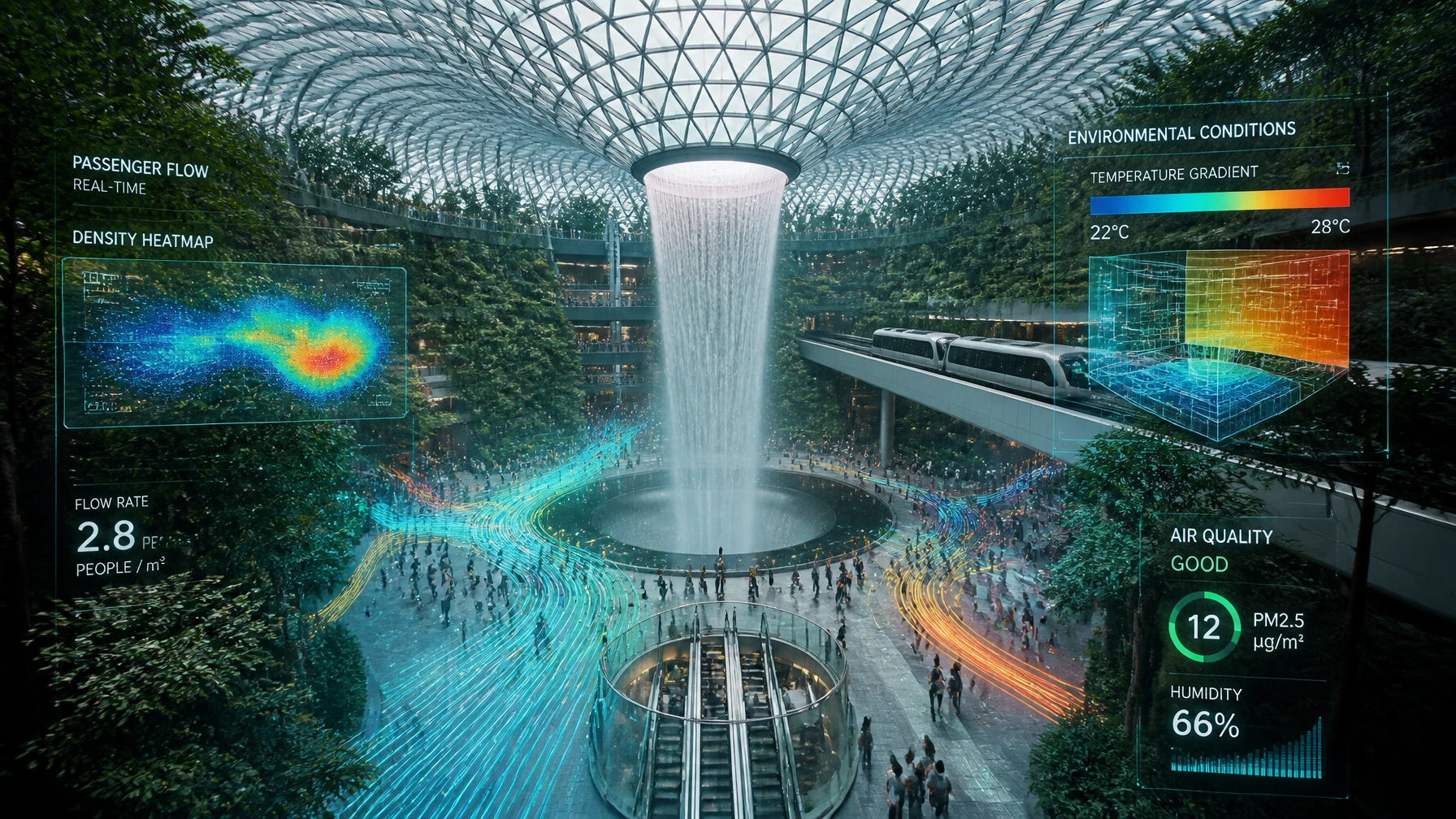
Singapore Changi Airport (SIN) is consistently ranked as the world’s best airport, serving as a global benchmark for efficiency, architecture, and passenger experience. For the modern traveler, navigating its four massive terminals and the iconic Jewel complex can seem daunting. However, behind the lush indoor waterfalls and seamless check-in kiosks lies a sophisticated digital nervous system.
At MetaWorldX, we understand that the future of transit isn't just about physical infrastructure; it’s about the digital layers that optimize it. By integrating AI digital twin airports technology, hubs like Changi can transform from static buildings into living, breathing ecosystems that predict passenger needs before they even arise. This guide will help you navigate SIN like a pro while exploring the high-tech innovations: like the MetaWorldX digital twin: that make such a feat possible.
The Terminal Ecosystem: A Quick Overview
Changi Airport is comprised of four main passenger terminals (T1, T2, T3, and T4) and the Jewel complex. Understanding the layout is the first step to a stress-free journey.
- Terminal 1 (T1): The gateway for many international full-service carriers. It offers the most direct access to the Jewel.
- Terminal 2 (T2): Recently renovated and reopened, T2 primarily handles Singapore Airlines’ regional flights and select partner airlines.
- Terminal 3 (T3): Known for its "butterfly" roof and natural lighting, this is the main hub for Singapore Airlines’ long-haul flights.
- Terminal 4 (T4): A separate building catering to regional and budget carriers. Unlike T1–T3, it relies on automated "Fast and Seamless Travel" (FAST) systems.
The era of virtual cities is here. To manage these massive spaces, airport operators are increasingly turning to smart city solutions to visualize and manage operations in real-time.
The AI Engine: How Digital Twins Power Changi’s Efficiency
While travelers enjoy the amenities, AI for airport operations is working tirelessly in the background. A digital twin is a virtual 3D replica of the physical airport, updated in real-time with data from IoT sensors, cameras, and building management systems.

Optimizing Passenger Flow and Queue Management
One of the most critical applications of a MetaWorldX smart airport solution is managing the movement of people. By using AI-driven simulations, operators can predict where bottlenecks will occur: be it at immigration, security, or taxi stands: and reroute staff or passengers accordingly.
- Real-time Heatmaps: Visualizing density in T3’s departure hall allows for proactive crowd control.
- Predictive Staffing: AI models forecast arrival surges, ensuring that immigration counters are never understaffed.
HVAC Efficiency and Environmental Control
Managing the climate of a tropical airport with a giant indoor waterfall requires immense energy. Smart building technology allows for the precise adjustment of HVAC systems based on real-time occupancy.
- Dynamic Cooling: Sensors detect when a gate is empty and automatically scale back cooling to save energy.
- Air Quality Monitoring: Maintaining the health of the 2,000 trees in the Forest Valley requires precise humidity and CO2 controls, all managed via the digital twin.
AI Airport Security and Critical Infrastructure
Safety is the foundation of any world-class hub. Using critical infrastructure digital twins, security teams can run "what-if" scenarios for emergency responses.
- Automated Surveillance: AI identifies unattended baggage or unauthorized entries instantly.
- Predictive Maintenance: Digital twins monitor the health of baggage belts and Skytrains, flagging potential failures before they disrupt travel.
Navigating Jewel Changi: Tips for the Ultimate Layover
Jewel isn't just a mall; it's a destination. Located landside (outside of immigration), it connects T1, T2, and T3.
- Immigration is Required: If you are in transit, you must clear immigration to visit Jewel. Ensure you have at least a 5-hour layover to make the trip worthwhile.
- Early Check-In: Use the Early Check-in Lounge in Jewel (Level 1) to drop your bags up to 24 hours in advance (depending on the airline), allowing you to explore hands-free.
- The Rain Vortex: The world’s tallest indoor waterfall is most impressive during the evening light and sound shows.
- Baggage Storage: If you can't check your bags early, use the 24-hour Left Luggage service available in all terminals and Jewel.
Digital twin technology airports like Changi use these complexes to balance passenger satisfaction with operational revenue, using data to optimize retail layouts and foot traffic.
Seamless Connections: Moving Between Terminals
Changi makes moving between terminals effortless, but you need to know the right modes of transport.
- T1, T2, and T3 (Airside & Landside): These terminals are linked by the free Skytrain. It takes about 4 minutes to travel between any two terminals.
- Terminal 4 (The Outlier): T4 is not connected to the Skytrain. You must take a free shuttle bus from T1 or T3. Factor in an additional 20–25 minutes for this transfer.
- Walking Links: If you have time, the link bridges between T2/T3 and Jewel offer stunning views and are a great way to stretch your legs.

Practical Travel Advice: Check-in and Security
Changi operates differently than many Western airports, particularly regarding security.
- Security at the Gate: In T1, T2, and T3, security screening happens at the individual boarding gate, not a central checkpoint. This means you can carry liquids (purchased landside) right up until you enter the gate area.
- No Boarding Calls: Changi is a "silent airport." There are no announcements for boarding. You must keep an eye on the flight information screens or the iChangi app.
- Automated E-Gates: Most travelers can use the automated immigration gates, which utilize biometric data to process passengers in under 30 seconds. This is a prime example of public health and safety systems streamlining the traveler experience.
Transit Options: Getting to and from the City
Once you've cleared the digital-twin-optimized halls of Changi, getting to Singapore's city center is straightforward.
- MRT (Train): The Changi Airport MRT station is located between T2 and T3. It's the most cost-effective way to reach the city (approx. 45 mins).
- Taxis and Ride-Hailing: Available at every terminal. Singapore’s taxi system is highly regulated and efficient.
- Bus: Public buses (lines 24, 27, 34, 36, 53, 110, and 858) operate from the basement bays of T1, T2, and T3.
The Visionary Future of Flight
Singapore Changi is more than just a transit hub; it is a testament to what is possible when visionary design meets cutting-edge technology. By utilizing AI for airport operations and comprehensive digital twins, Changi has moved beyond traditional management into a realm of predictive, proactive excellence.

Whether you are marveling at the Rain Vortex or moving through an automated security gate, you are experiencing the power of a MetaWorldX smart airport ecosystem. As we continue to roll out digital twin solutions globally: from Dubai Airport to Toronto: the goal remains the same: to make the complex simple and the journey unforgettable.
Ready to see how MetaWorldX can transform your infrastructure? Explore our full range of services and join us in building the smart cities of tomorrow.