
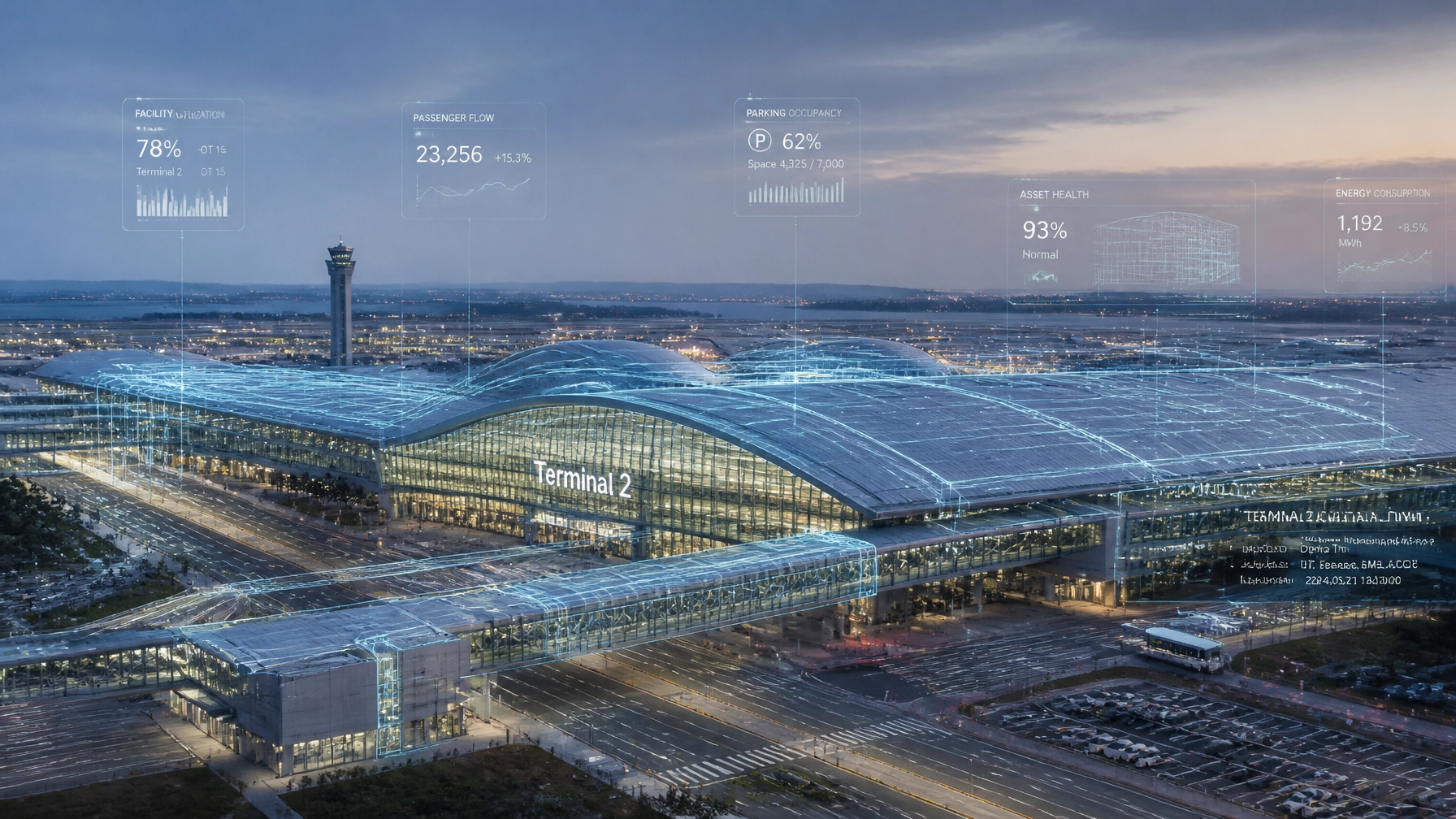
Incheon International Airport (ICN) is more than just a transit hub; it is a preview of the future of urban mobility. Ranked as the 12th busiest airport globally, ICN serves as the primary gateway to South Korea and a critical nexus for international trade and travel. In 2026, the airport has reached a new pinnacle of efficiency, driven by a massive terminal reorganization and the deployment of the world’s most advanced AI-powered digital twin infrastructure.
Whether you are a frequent business traveler or a first-time visitor, navigating this massive complex requires an understanding of its latest digital tools and structural updates. This guide provides the essential intelligence needed to master ICN, while exploring the sophisticated technology: much like the solutions developed by MetaWorldX: that keeps this global gateway running with surgical precision.
The 2026 Terminal Reorganization: Where Do You Fly?
One of the most significant shifts in ICN’s recent history occurred on January 14, 2026, when Asiana Airlines officially transitioned all operations to Terminal 2. This move was designed to consolidate major carriers and streamline the passenger experience.
- Terminal 1 (T1): Still the primary home for Star Alliance (excluding Asiana), Oneworld, and most low-cost carriers. It encompasses gates 1–50 and the midfield Concourse (gates 101–132), accessible via the underground automated train (IAT).
- Terminal 2 (T2): Now the dedicated hub for the "Big Two" Korean carriers. It serves Korean Air, Asiana, Delta, Air France, KLM, and other SkyTeam partners. T2 handles gates 201–270.
The era of virtual cities is here. Navigating between these terminals is seamless thanks to a free shuttle bus and the IAT train, but travelers must double-check their terminal at least 24 hours before departure to account for these recent changes.
Mastering SmartPass: The End of Security Lines
The most effective way to "pro" your way through Incheon is by utilizing the SmartPass system. This facial recognition technology allows you to breeze through departure gates and security checkpoints without repeatedly presenting your passport or boarding pass.

How to set up your SmartPass:
- Download the ICN SmartPass App: Register your passport and facial data before arriving at the airport.
- Link Your Boarding Pass: Once you check in online, upload your mobile boarding pass to the app.
- Use Dedicated Lanes: Look for the "SmartPass" signage at security entrances and boarding gates.
In 2026, the system has expanded to all 158 boarding gates across both terminals. By digitizing your identity, you reduce your time at security to under 10 minutes, even during peak hours.
Amenities and Transit: The Gold Standard of Comfort
Incheon consistently ranks as one of the world's best airports because it treats the layover as an experience, not a waiting game.
- Arrival Requirements: Ensure you have completed your K-ETA or e-Arrival Card before landing to avoid delays at immigration.
- Transit to Seoul: The AREX Express Train remains the fastest option, reaching Seoul Station in 43 to 51 minutes. For direct hotel drop-offs, the Limousine Bus network covers almost every major district in the city.
- Rest & Wellness: The 4th floor of both terminals features 24/7 spas, nap zones, and high-end lounges. If you have a long layover, the "Spa on Air" in T1 is a legendary retreat for weary travelers.
The Engine of Efficiency: AI and Digital Twins at ICN
Behind the sleek glass and steel of Terminal 2 lies a complex digital nervous system. ICN has pioneered the use of AI-driven digital twins to manage everything from passenger density to ground vehicle traffic.

Predictive insights drive modern operations. Incheon's digital twin platform integrates IoT sensors and 5G connectivity to create a real-time virtual replica of the airport environment. This allows operators to:
- Monitor Passenger Flow: AI identifies potential bottlenecks before they happen, allowing staff to redirect traffic dynamically.
- Manage Autonomous Robots: A fleet of guide, patrol, and "docent" robots navigate the halls, managed via a low-latency digital twin control platform.
- Optimize Ground Traffic: Since May 2025, an intelligent traffic system has used digital twin technology to monitor all ground vehicles, reducing fuel consumption and improving turnaround times.
This level of integration ensures that even with millions of passengers passing through, the airport remains calm, safe, and efficient.
Beyond Monitoring: The MetaWorldX Vision for Smart Airports
While Incheon represents the current gold standard, the future of Smart Cities and infrastructure lies in prescriptive analytics. At MetaWorldX, we are building the next generation of digital twin technology that moves beyond simple monitoring into the realm of proactive simulation and automated resilience.

Our Critical Infrastructure solutions are designed to integrate disparate data ecosystems: security, HVAC, logistics, and emergency response: into a single, actionable 3D environment. For airports like ICN, MetaWorldX technology enables:
- Scenario Planning: Simulating the impact of extreme weather or security events on flight schedules and passenger safety before they occur.
- Sustainability Tracking: Real-time environmental efficiency monitoring to reduce the carbon footprint of massive terminal buildings.
- Seamless Integration: Linking legacy Smart Buildings systems with modern AI-driven simulations to extend the life of existing assets.
The future of travel is predictive and personalized. By leveraging deeper AI integration, airports can transform from static hubs into intelligent, responsive environments that anticipate the needs of every traveler.
Conclusion: Navigation Perfected
Navigating Incheon International in 2026 is a masterclass in how technology can simplify human movement. From the strategic move of Asiana to Terminal 2 to the invisible hand of the AI digital twin managing the crowds, every detail is optimized for speed and safety.
As we look toward the future of global gateways, the integration of real-time data and 3D simulation remains the key to unlocking true operational excellence. We invite you to explore how MetaWorldX is redefining these possibilities for the smart cities and infrastructure of tomorrow.
Frequently Asked Questions
1. Which terminal does Asiana Airlines use at ICN?
As of January 14, 2026, Asiana Airlines operates exclusively out of Terminal 2.
2. What is the ICN SmartPass?
SmartPass is a facial recognition system that allows registered passengers to pass through security and boarding gates without showing physical documents. Registration is done via the official ICN SmartPass app.
3. How long does it take to get from ICN to Seoul?
The AREX Express train takes approximately 43–51 minutes to reach Seoul Station.
4. How does a digital twin help airport operations?
A digital twin creates a real-time virtual model of the airport, allowing AI to predict congestion, manage autonomous robots, and optimize ground vehicle traffic for better efficiency and safety.