
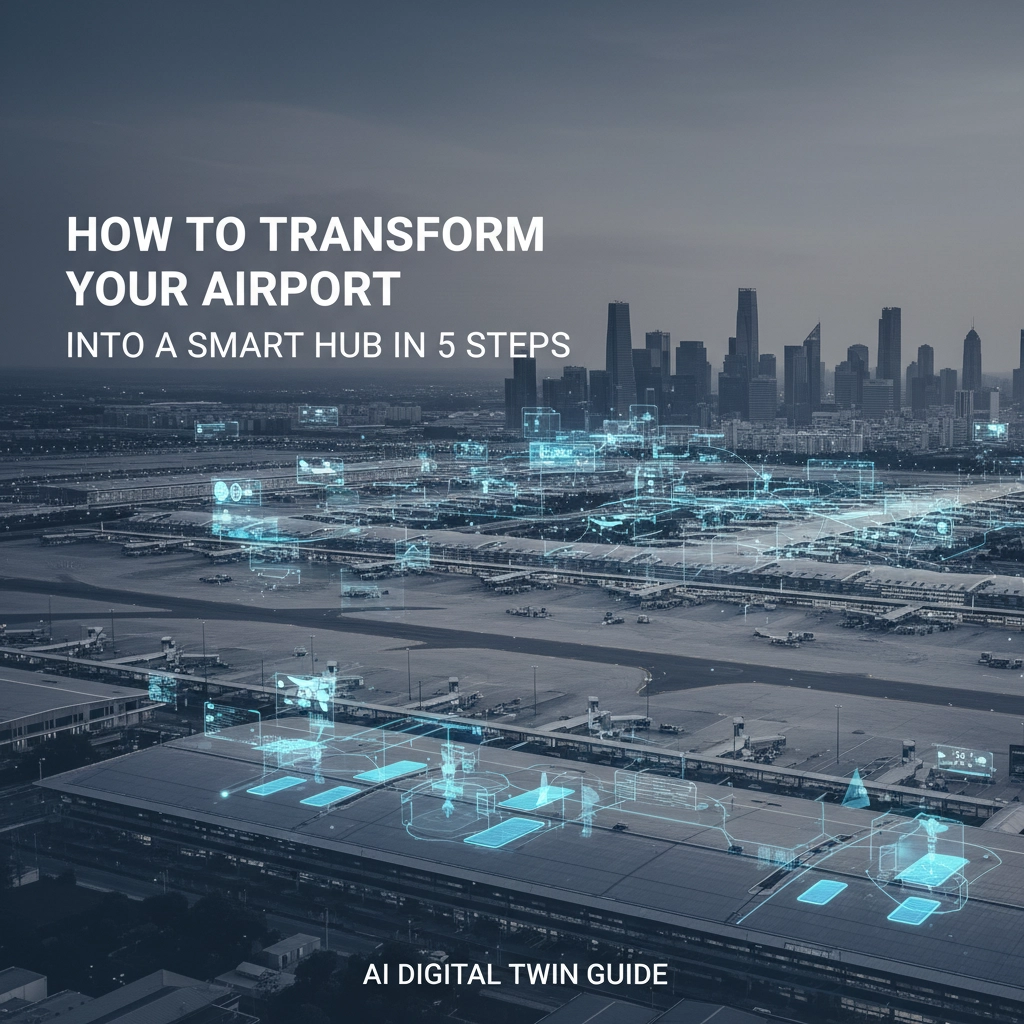
Airports worldwide are facing unprecedented challenges: increasing passenger volumes, operational complexity, and the demand for seamless travel experiences. Traditional airport management systems, built for a different era, struggle to keep pace with modern requirements. The solution lies in digital transformation through AI-powered digital twins that create intelligent, responsive airport ecosystems.
The era of smart airports is here. Forward-thinking airport operators are leveraging artificial intelligence, digital twin technology, and advanced connectivity to revolutionize operations, enhance passenger experiences, and optimize resource utilization. This comprehensive transformation requires strategic planning, not random technology adoption.
Step 1: Define Strategic Outcomes and Establish Clear Priorities
Start with outcomes, not technology. The most successful smart airport initiatives begin by clearly defining what success looks like for your specific operation. Rather than pursuing technology for its own sake, establish concrete goals around capacity optimization, operational cost reduction, passenger satisfaction metrics, and sustainability targets.
Focus on a narrow set of crucial priorities to address first. McKinsey research shows that airports achieve better results when they identify specific pain points and deliver measurable improvements before expanding to other areas. For example, one European hub concentrated initially on predictive maintenance and achieved significant reductions in equipment downtime across key infrastructure assets.
Key areas to prioritize include:
- Operational efficiency: Reducing aircraft turnaround times, optimizing gate assignments, streamlining baggage handling
- Passenger experience: Minimizing wait times, improving wayfinding, personalizing services
- Resource optimization: Maximizing asset utilization, reducing energy consumption, optimizing staff allocation
- Safety and security: Enhancing threat detection, improving emergency response, ensuring regulatory compliance
Engage all stakeholders: airlines, ground handlers, security personnel, retail operators, and passengers: to understand their specific challenges and expectations. This collaborative approach ensures your smart airport initiatives deliver real value across the entire ecosystem.

Step 2: Build Foundational Connectivity and Data Infrastructure
Establish the technological backbone that enables intelligent operations. Smart airport functionality depends on robust, reliable connectivity and comprehensive data collection capabilities. This foundation supports all advanced technologies while ensuring seamless communication across airport systems.
Deploy Private 5G Networks specifically designed for mission-critical airport operations. Unlike shared public networks, private 5G offers the reliability, speed, and security that autonomous vehicles, video surveillance, and IoT systems require. This dedicated infrastructure ensures uninterrupted connectivity even during peak operational periods.
Implement comprehensive IoT sensor networks throughout your airport facilities. These interconnected sensors provide real-time data and insights that enable enhanced monitoring and decision-making processes. Strategic sensor deployment should cover:
- Baggage handling systems and conveyor networks
- HVAC systems, escalators, and moving walkways
- Gate operations and aircraft positioning
- Passenger flow patterns and terminal congestion points
- Security checkpoints and access control systems
- Environmental conditions and energy consumption
Establish centralized data platforms that aggregate information from all sensors, operational systems, and external sources. This unified data environment becomes the foundation for digital twin modeling and AI-powered analytics.
The investment in robust infrastructure pays dividends across all subsequent smart airport initiatives. Without reliable connectivity and comprehensive data collection, advanced technologies cannot deliver their full potential.
Step 3: Deploy Digital Twin Technology for Real-Time Monitoring and Simulation
Create virtual replicas of your airport systems that provide unprecedented visibility into operations and enable predictive scenario modeling. Digital twins collect data from IoT sensors, cameras, and operational databases to maintain a live, accurate representation of airport assets and workflows.
Real-time operational visibility transforms airport management by providing a single, unified view of all systems and processes. Airport managers gain comprehensive insights into security operations, passenger services, maintenance activities, and resource utilization. This transparency eliminates operational silos and enables better cross-departmental coordination.
Digital twins excel at predictive simulation and scenario planning. Test the impact of new gate configurations, staff reallocation strategies, or emergency response procedures without affecting live operations. This capability dramatically reduces trial-and-error decision-making and accelerates optimization of airport layouts and resource allocation.
Predictive maintenance becomes proactive when digital twins monitor equipment performance patterns and identify early warning signs. Baggage systems, HVAC equipment, escalators, and critical infrastructure components provide continuous performance data that enables maintenance teams to address issues before failures occur. This approach reduces unexpected downtime, extends asset lifespan, and optimizes maintenance budgets.
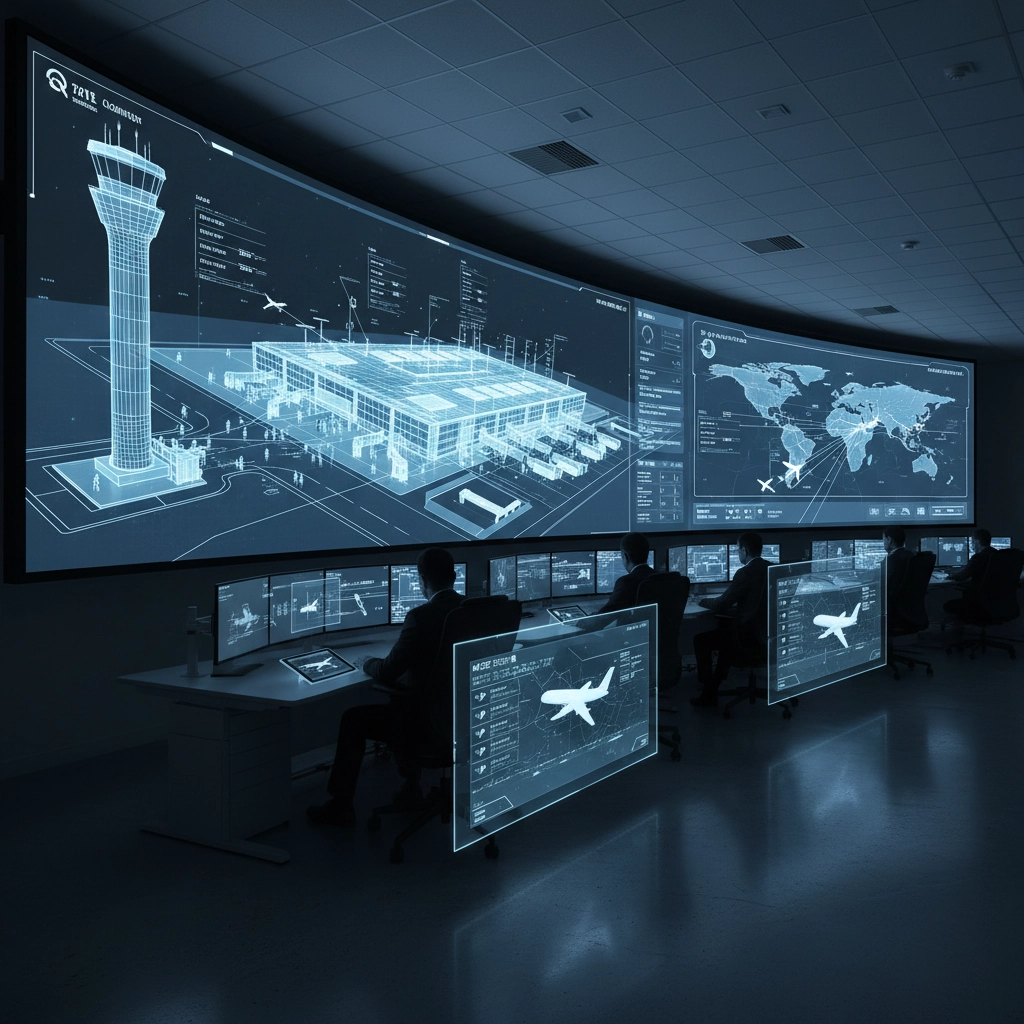
Integration capabilities allow digital twins to coordinate information across previously disconnected systems. Security, operations, maintenance, and passenger services teams can access shared data platforms and collaborative decision-making tools that improve overall airport efficiency.
At MetaWorldX, our digital twin solutions have helped airports reduce operational costs by up to 25% while improving passenger satisfaction scores through better resource management and proactive issue resolution.
Step 4: Implement AI-Powered Intelligence for Automated Operations
Transform data into actionable intelligence through artificial intelligence systems that process vast volumes of real-time information and enable informed decision-making across all airport operations. AI capabilities should address multiple operational fronts simultaneously.
Predictive analytics anticipate operational challenges like flight delays, gate conflicts, or resource bottlenecks before they impact passengers. These systems enable proactive adjustments to staffing levels, aircraft turnaround procedures, and terminal flow management. The result is reduced delays and optimized throughput across your entire airport operation.
Passenger-facing AI technologies enhance the travel experience through multiple touchpoints:
- Biometric-based check-in and boarding processes that are both touchless and efficient
- Real-time communication systems that notify travelers of gate changes, boarding times, and baggage status
- AI-driven chatbots and virtual assistants providing 24/7 multilingual support for passenger inquiries
- Personalized retail and hospitality recommendations based on travel history and preferences
Automated resource management optimizes staff allocation, equipment utilization, and energy consumption. AI systems can automatically adjust lighting, heating, and cooling based on passenger density and weather conditions. They can also optimize cleaning schedules, security patrol routes, and maintenance activities based on real-time operational data.
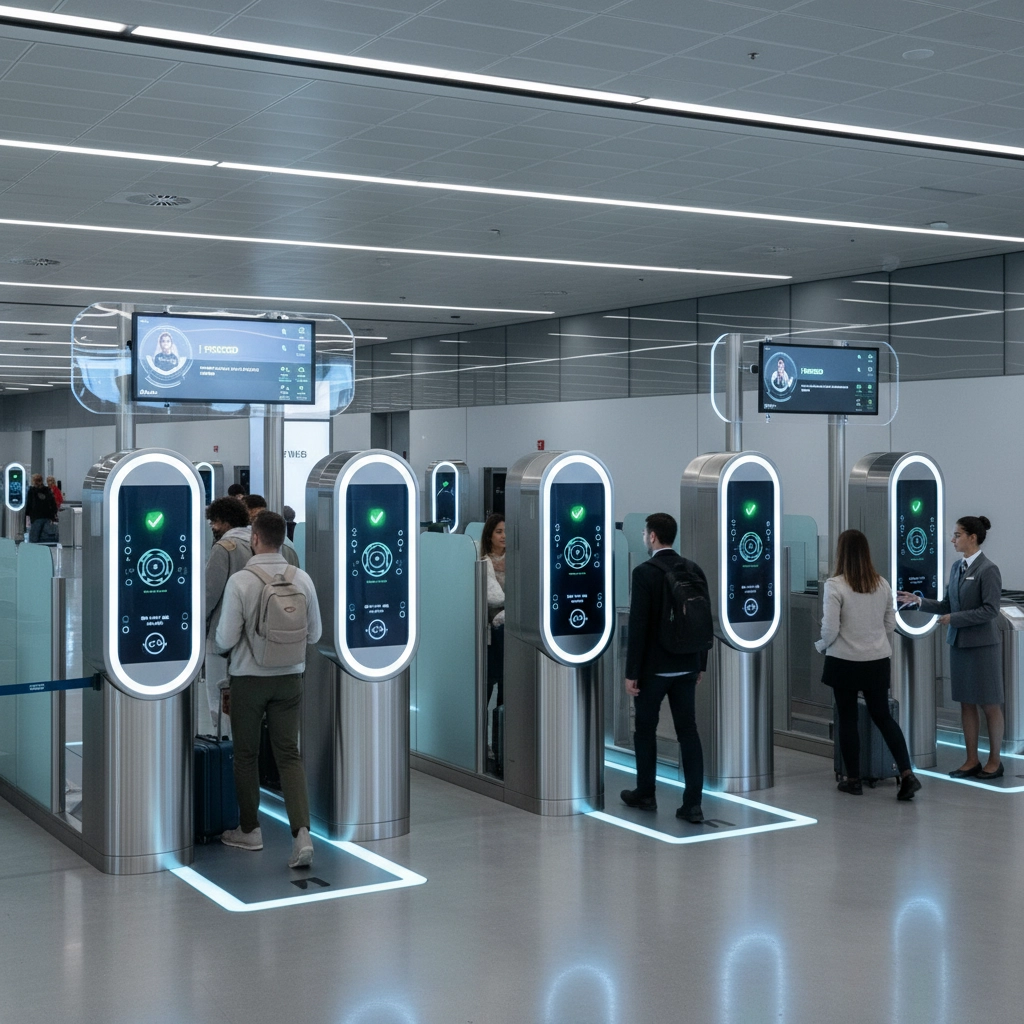
Intelligent security systems enhance safety while improving passenger flow. AI-powered video analytics can identify potential security threats, detect abandoned baggage, and monitor crowd density to prevent congestion. These systems work seamlessly with human security personnel to create more effective, less intrusive security operations.
The key to successful AI implementation is ensuring these systems work collaboratively rather than in isolation. Integrated AI platforms that share data and coordinate responses across departments deliver exponentially better results than standalone applications.
Step 5: Scale Strategically and Continuously Optimize Performance
Successful scaling requires careful long-term planning and avoiding the trap of siloed technology implementations. Rather than treating each upgrade as an isolated project, integrate new capabilities into your broader airport development strategy from the beginning.
Design terminal facilities to be smart and adaptive from the start, rather than building capacity without intelligence and planning to add sophistication later. This approach reduces long-term costs and ensures seamless technology integration as your airport grows.
Expand successful applications systematically once initial priorities demonstrate measurable improvements. Use proven results to build organizational buy-in and secure resources for broader implementation. The data and insights gained from early deployments inform better decision-making for subsequent phases.
Continuous performance monitoring against your original outcome metrics is essential. Track capacity improvements, cost reductions, passenger satisfaction scores, and sustainability measures. Use these insights to refine AI models, expand sensor coverage, and enhance digital twin functionality.
Foster cross-departmental collaboration by ensuring all stakeholders have access to shared data platforms and collaborative decision-making tools. Smart airports succeed when technology breaks down organizational silos rather than creating new ones.
Plan for future expansion by selecting scalable technologies and maintaining flexibility in system architecture. The smart airport landscape continues evolving, and your infrastructure should accommodate emerging technologies without requiring complete overhauls.
Creating Synergistic Smart Airport Operations
The most transformative results occur when AI, connectivity infrastructure, and digital twins work in perfect synchronization. Digital twins provide the visibility and simulation capabilities, 5G and IoT deliver reliable connectivity and comprehensive data, while AI drives intelligent decision-making and automation.
This integrated approach creates measurably smarter operations, significantly improved passenger experiences, and stronger financial performance. Smart airports also support sustainability goals through optimized energy consumption, predictive maintenance that extends asset lifecycles, and data-driven resource management.
The transformation from traditional airport operations to intelligent smart hub functionality represents more than a technology upgrade: it's a fundamental shift toward responsive, data-driven management that anticipates challenges and optimizes performance continuously.
Ready to begin your smart airport transformation? Contact MetaWorldX to learn how our digital twin solutions can optimize your airport operations and enhance passenger experiences through intelligent, AI-powered systems.