
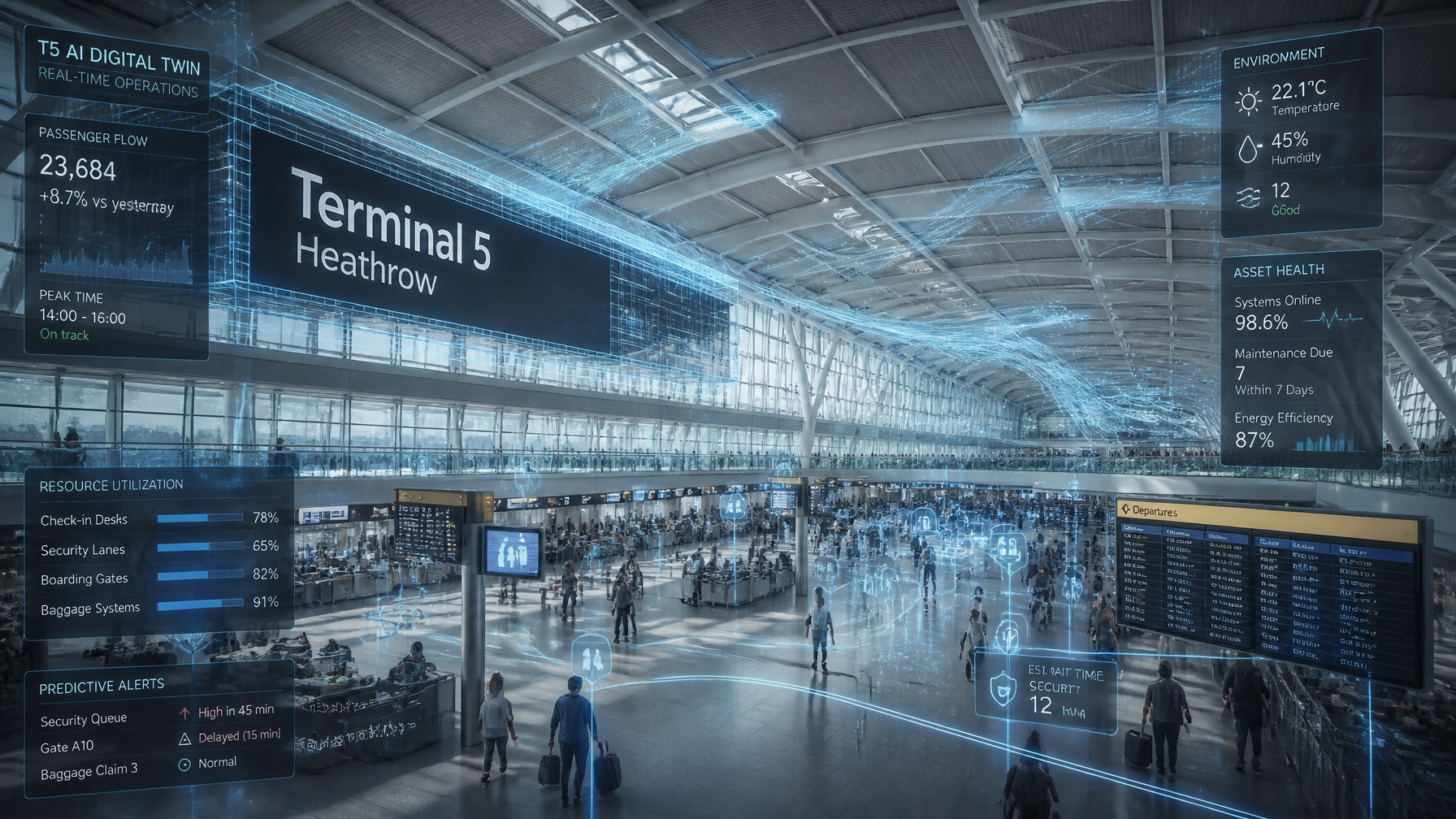
London Heathrow (LHR) is more than just an airport; it is a sprawling, high-stakes ecosystem that functions like a small city. As one of the world's busiest aviation hubs, navigating its four active terminals can feel like a daunting task for even the most seasoned travelers. However, behind the glass facades and bustling departure halls lies a sophisticated digital infrastructure designed to keep millions of passengers moving every year.
At MetaWorldX, we believe the future of global transit lies in the "Virtual City" model. By leveraging digital twin technology airports can transform from reactive environments into proactive, AI-driven hubs. Whether you are catching a long-haul flight from Terminal 5 or connecting through the "Queen’s Terminal" (T2), mastering LHR operations is a matter of understanding the flow.
The era of virtual cities is here.
Step 1: Strategic Terminal Selection and Passenger Flow
The first step to a stress-free Heathrow experience is knowing exactly where you are going. Heathrow operates through Terminals 2, 3, 4, and 5. Each terminal serves specific airline alliances and geographic regions, and they are not all connected by foot.
- Terminal 2 & 3: Known as the Central Terminal Area, these are within walking distance of each other via underground pedestrian walkways.
- Terminal 4 & 5: These are standalone structures located on the southern and western perimeters of the airport, requiring rail or bus transfers.
AI for airport operations has revolutionized how these spaces are managed. By using a MetaWorldX digital twin, airport operators can visualize real-time passenger density across all four terminals. For the traveler, this means shorter wait times and better-managed concourses. When a digital twin identifies a bottleneck in Terminal 2's Level 5 check-in zone, resources can be diverted instantly to alleviate the pressure.
Restating the goal: Accurate terminal knowledge combined with real-time flow optimization ensures you never find yourself at the wrong end of the runway.
Step 2: Mastering Check-In and the AI-Driven Baggage Dance
Once you have arrived at your terminal, the next hurdle is the check-in and bag-drop process. Heathrow has moved toward a more automated, self-service model to speed up departures.
- Zone Identification: Check your airline’s designated zone (A through K) on the digital screens immediately upon entry.
- Self-Bag Drop: Many airlines in T2 and T5 now use automated kiosks.

Behind the scenes, the journey of your suitcase is a marvel of MetaWorldX smart airport technology. Modern baggage handling systems are integrated with IoT sensors and digital twins to monitor the health of miles of conveyor belts. AI airport security and tracking systems ensure that every bag is accounted for, using predictive analytics to prevent "lost bag" scenarios before they happen. If a motor in the Terminal 5 baggage basement shows signs of vibration fatigue, the digital twin alerts maintenance teams to fix it before it causes a systemic delay.
Restating the goal: Efficient check-in is supported by a silent, AI-powered baggage ecosystem that prioritizes reliability and speed.
Step 3: Navigating Security with AI Precision
Security is often the most stressful part of the journey. At Heathrow, wait times can fluctuate from 10 minutes to over an hour depending on the time of day and terminal.
- The 100ml Rule: While some UK airports are upgrading scanners, Heathrow still largely requires liquids and large electronics to be removed and placed in separate trays.
- Fast Track: Available for premium cabin passengers or through pre-booking, this can save significant time during peak morning banks.

MetaWorldX specializes in creating Safe City environments, and airports are the ultimate proving ground. By integrating AI airport security into a digital twin, security leads can simulate various "what-if" scenarios: such as a sudden surge of passengers from three delayed A380s: to optimize staff positioning. This predictive insight ensures that security lanes remain open and efficient, reducing the friction between you and your flight.
Restating the goal: Advanced simulation and real-time monitoring transform security from a bottleneck into a streamlined gateway.
Step 4: Optimizing the Airside Experience and HVAC Efficiency
After clearing security, you enter the "airside" departures area. Whether you are heading to the satellite B-gates at Terminal 2 via the underground travelators or staying in the main T5A building, the environment is designed for comfort and consumption.
- Satellite Gates: Always allow an extra 15–20 minutes if your flight departs from a "B" or "C" pier.
- Lounges: LHR boasts some of the world's best lounges. Use the Heathrow app to check capacity.
Managing the climate of these massive glass structures is an engineering challenge. This is where digital twin technology airports truly shine. MetaWorldX’s AI-driven simulations monitor HVAC efficiency in real-time, adjusting temperatures based on passenger density and external weather conditions. This not only ensures a comfortable waiting environment but also significantly reduces the airport’s carbon footprint by optimizing energy consumption.
Restating the goal: A smart building approach ensures that your time airside is comfortable, sustainable, and well-timed for boarding.

Step 5: Seamless Connections and Predictive Maintenance
Heathrow is a primary global transfer hub. If your journey involves a terminal change (e.g., arriving at T3 and departing from T5), the "Purple Signs" are your best friend.
- Airside Transfers: Use the free Flight Connections buses. Do not exit through immigration unless you have a separate ticket and need to re-check bags.
- Landside Transfers: The Heathrow Express and Elizabeth Line offer free inter-terminal travel between the Central Terminal Area (T2/3) and T4/T5.
The reliability of these transit links is critical. Through predictive maintenance, digital twins monitor the health of the rail tracks and bus fleets. By analyzing data from thousands of sensors, the MetaWorldX digital twin can predict when a train door or a bus engine requires servicing, preventing unplanned outages that could cause thousands of passengers to miss their connections.
Restating the goal: Data-driven transit ensures that "connection anxiety" is replaced by a predictable, well-orchestrated transfer.

The Future of Global Aviation: MetaWorldX Smart Airports
Navigating London Heathrow is a masterclass in managing complexity. From the moment you check in to the second your wheels leave the tarmac, thousands of data points are being analyzed to ensure your safety and efficiency. At MetaWorldX, we are proud to be at the forefront of this transformation, creating the AI-powered digital twins that make the world’s most complex hubs feel simple.
The integration of predictive analytics, real-time monitoring, and comprehensive 3D simulations allows airport operators to make smarter, more impactful decisions. As we continue to roll out these technologies across the globe, the passenger experience will only become more intuitive and seamless.
The era of virtual cities is here. We invite you to explore how our technology is redefining urban and industrial spaces. Whether you are a city planner, a developer, or an infrastructure operator, the journey toward a more interconnected and efficient world begins with a digital twin.
Are you ready to see your operations in a new dimension?
Learn more about MetaWorldX’s Visionary Solutions.